slicing tomatoes while studying erosion
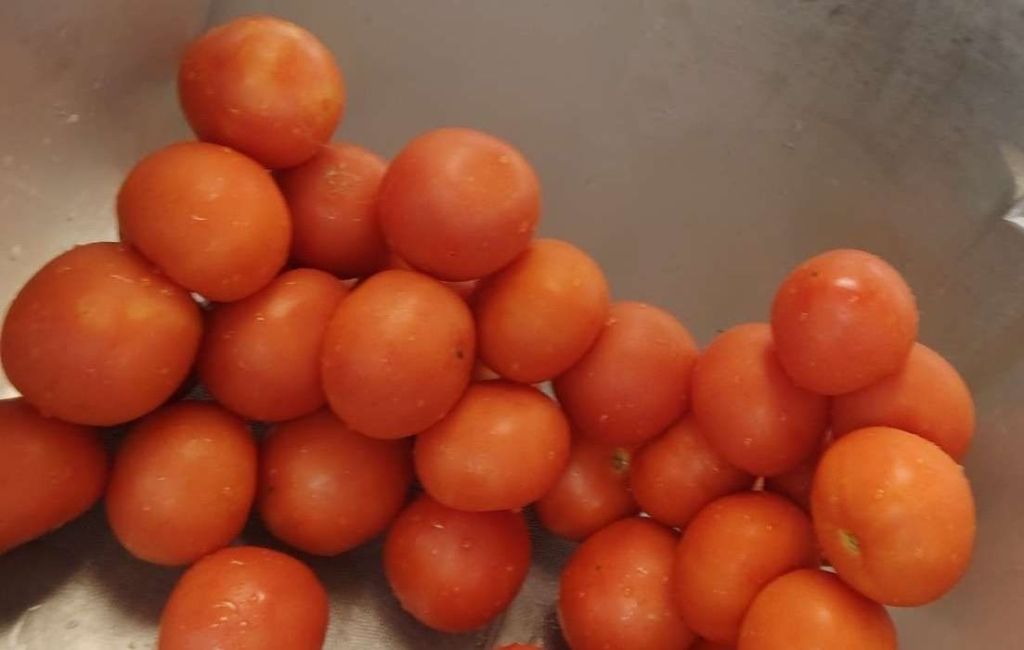
a tomato-slicing employee dumped
eighty-eight point eight pounds, forty kilos, of tomatoes into a large container
and filled the container with anti-bacterial “veggie wash” near the veggie-washing sink
and let the tomatoes soak for more than a minute
then dumped out the wash into the sink,
slid the container onto his pushcart,
wheeled the cart back to the workstation,
and began using a mechanical tomato slicer
to slice tomatoes into five-pound heat-sealing bags
one tomato at a time. it is a job
well suited to one with a long-distance runner’s
or afghan-crocheter’s mentality,
someone who drives satisfaction from repetition
and precision.
but even runners and crocheters need some distraction
from repetition that may grow more tedious
with each passing hour. the tomato-slicing employee
found he had just such a need, so he broke up the tedium
by plucking out tomatoes in one specific area of the container
so that a cavity was formed
in the volume of tomatoes, and the cavity became a cave
as the tomato-plucker reached the container’s floor
and additional tomatoes were plucked
from the floor level while the tomato walls,
kept from collapsing by weight-pressure
from the top layers, were pluck-eaten away.
as far as the plucker could tell, this handiwork
did not slow his production, and may in fact
have increased his focus and efficiency.
..
eventually, of course, a wall collapsed, and when it did
the tomato-plucker suddenly realized
that he was unwittingly modeled a form of erosion
that bore a slight similarity
to the process by which structures
like the Grand Canyon
were formed.
he was elated and chagrined to find
that his working time had also eroded away
and he would have to hustle to clean up his station
by clock-out time.
..
as he clocked out he felt regret
that he was no longer in high school
and was this unable to convert his discovery
into a Science Fair project, but he still
felt ridiculously good.
 One with Clay, Image and Text