The Epigram
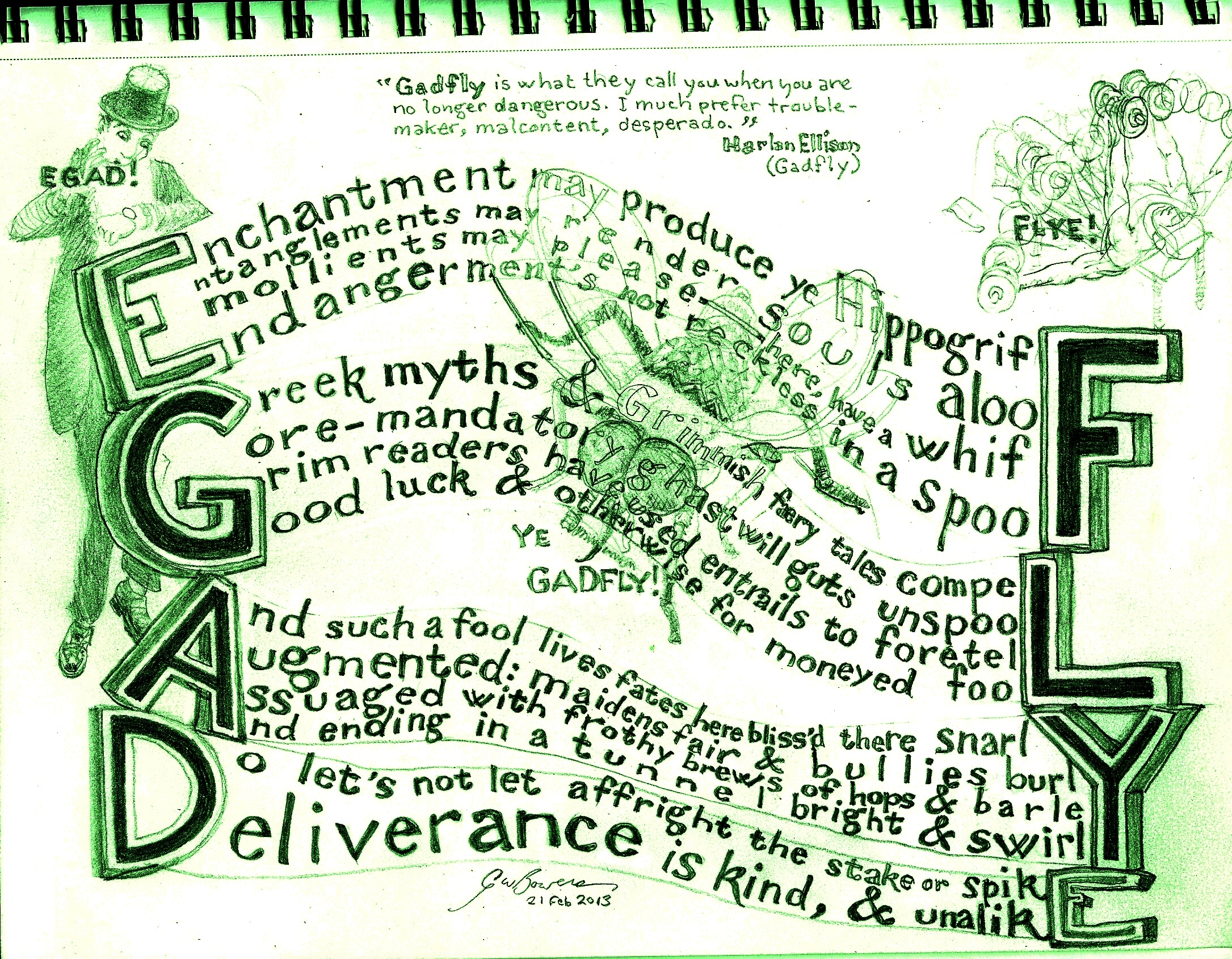
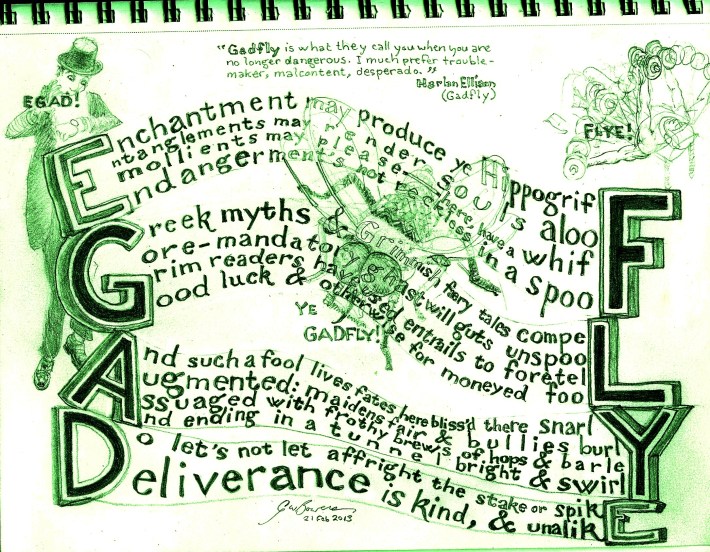
“Gadfly is what they call you when you are no longer dangerous. I much prefer troublemaker, malcontent, desperado.” Harlan Ellison (Gadfly)
The Sonnet
Enchantment may produce ye Hippogriff
Entanglements may render souls aloof
Emollients may please–here, have a whiff
Endangerment’s not reckless in a spoof
Greek myths & Grimmish færy tales compel
Gore-mandatory ghast will guts unspool
Grim readers have used entrails to foretell
Good luck & otherwise for moneyed fool
And such a fool lives fates here bliss’d there snarly
Augmented: maidens fair & b u l l i e s burly
Assuaged with frothy brews of hops & barley
And ending in a t u n n e l bright & swirly
Do let’s not let affright the stake or spike
D e l i v e r a n c e is kind, & unalike
The Annotation
First I thought of a Gadfly. Then it occurred that there are two words, Egad and Flye, that acrosticized would be Gadfly bookended by the letter E. The result promised to be a startling (Egad!) exercise (Flye!) in nonsensical-but-not hybridization. Myths from early history have done rudimentary gene-splicing: see Pegasus and Hippogriff. When we make up stories, if anything’s possible and it’s entertainingly told, the more outrageous the Nonesuches the better. And story-danger is not reality-danger.
“Gore-mandatory ghast” is a weird tip of the hat to Mervyn Peake and his Castle Gormenghast. I have not read more than a handful of Peake’s words, and I found his illustrations unpalatably crude, but I got enough of a taste to see he was a unique visionary and a singular storyteller.
I use the word Deliverance ambiguously. “Deliverance is kind” is a skewed tribute to Stephen Crane, who wrote “War is kind” while giving only the barest hint of explanation. Like Crane, I think the reader is rewarded if she or he must supply important details without regard to what the “right” answer is. Dear reader, whatever you think Deliverance means in this poem, you’ll be right–if you are sincere.
One last note about Harlan Ellison. He has won innumerable awards for his writing, and is admired by such as Tom Smothers, Robin Williams, and Neil Gaiman. He was Dangerous once. I do not think he is Dangerous any more, not the way he wants to be Dangerous, so I harmlessly rib him with the “Gadfly” tag, but I’d love to be wrong.
Anyone else want to play?
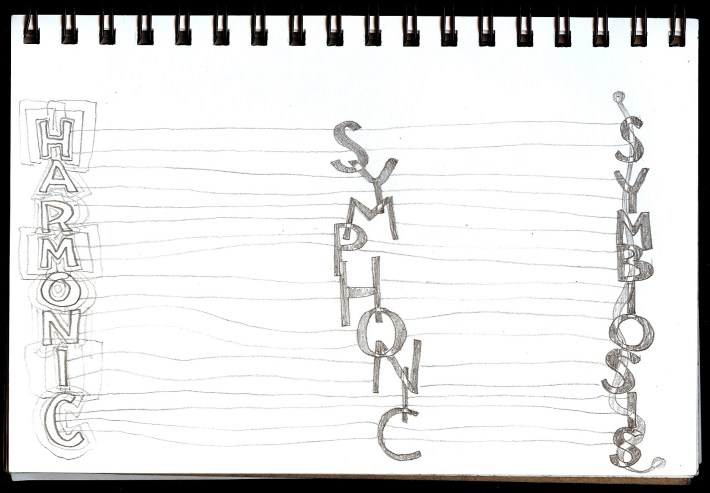
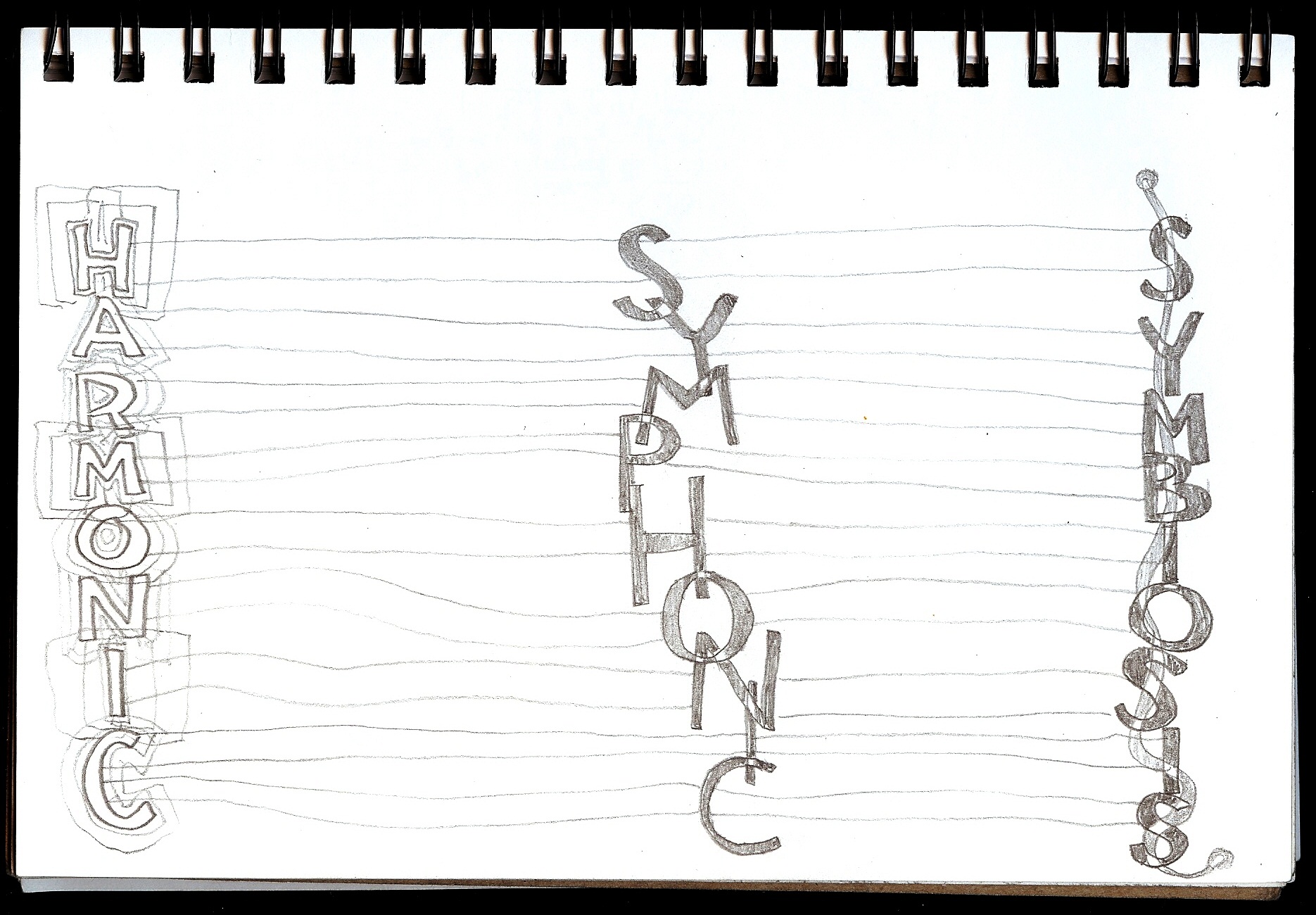
Below I supply the beginning of a page. I may complete the page as soon as later today, or it may lay fallow for a while. The triple acrostic is HARMONIC SYMPHONIC SYMBIOSIS. A hint to writing these is to start with the words at the end of the lines. If the letter I gives you trouble, try doing an Internet search on “words ending in i.” Note also that HARMONIC has eight letters while SYMPHONIC and SYMBIOSIS both have nine; so I’ve supplied line guides that include two lines coming from the C in HARMONIC. Hope you try it for ten minutes, dear reader; you may become hooked, and it’d be an ego boo for me to midwife another acrostic poet into the virtual world. Good Fun and Have Luck!