Archive

Tag Archives: Robert Heinlein

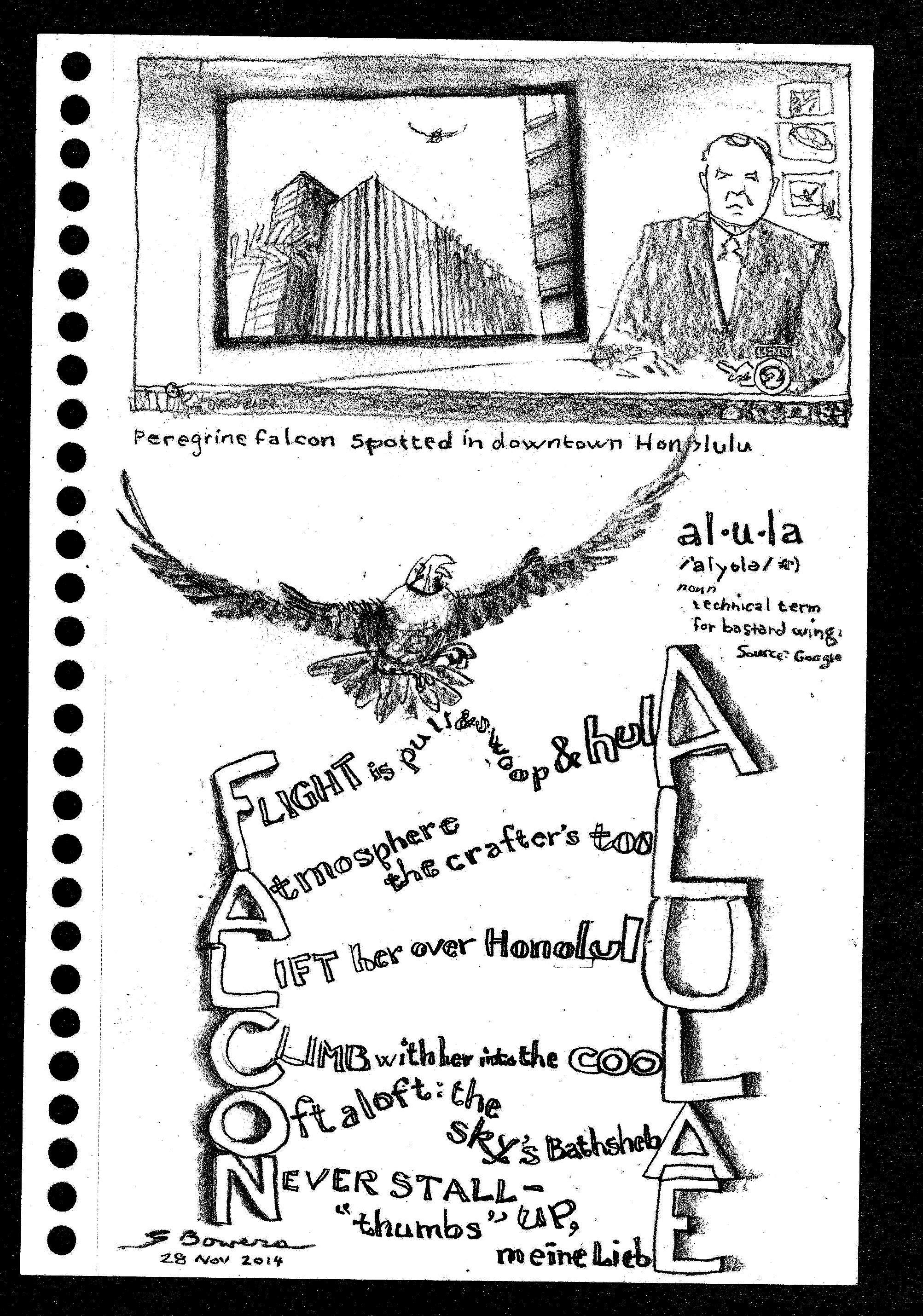
There are some words that seduce the poet through ululation. Ululation is one such. Then there are uvula, Pavuvu, Honolulu–and alula.

An alula, also known as a spurious or bastard wing, is a substructure of the bird’s wing that when flexed changes the airfoil of the wings, raising the pressure differential of upside and underside airflow, which helps prevent the bird from stalling. My first encounter with this word was as a teenager reading Robert A. Heinlein’s “The Menace from Earth.” His protagonist, one Holly Jones, resident of the Moon, liked to fly using her top-of-the-line Storer-Gulls. Controls encircling her thumbs allowed her to flex her alulae.

When the happy mashup of Honolulu and a peregrine falcon showed up on my radar, I could not but celebrate with this page, which is really a celebration of the word alula and its plural alulae.

001

falcon alulae

flight is pull & swoop & hula
atmosphere the crafter’s tool
lift her over honolulu
climb with her into the cool
oft aloft: the sky’s bathsheba
never stall–“thumbs” up, meine liebe

You can’t see a thought, you can’t measure, weigh, nor taste it – but thoughts are the most real things in the Galaxy.” –Robert Heinlein

“It’s the thought that counts.” –folk “wisdom”

“The thought without action isn’t worth the non-paper it’s written on. It’s the thought-driven ACTION that counts.” –Me

002

I may not be able to see a thought, but I thought I’d try drawing one. [bemused sketchy smile]

“Victory in defeat, there is none higher.” –Robert Heinlein

“When a man finds that it is his destiny to suffer, he will have to accept his suffering as his task; his single and unique task. He will have to acknowledge the fact that even in suffering he is unique and alone in the universe. No one can relieve him of his suffering or suffer in his place. His unique opportunity lies in the way in which he bears his burden.” –Victor Frankl

“I’m getting too old for this shit.” –Danny Glover

Victory Declared

Vicissitudes may leave us both bedraggled and bedecked
It went so for the legend horn men Bird and Beiderbecke
Catastrophe’s the catnip of the studio exec
The scoffing sounds of nature may belie the overall
Our honeybee’s a humbug & our sheep are wont to baa
Remember there were never any roars from ‘Lion’ Lahr
Ye GODS who made both Yggdrasil & trees of lesser grade
You’ll hear us sing REGARDLESS of how badly we’re dysplayed

(Calligraphed image to follow in the near future)

(Neologism: dysplay, verb, transitive and intransitive: to be made by malign, superior force or forces to do unnatural things)

Image

I think I’ve read more words that Stephen King has written than words by anyone else. (Robert Heinlein and Herman Wouk might be close.) That includes CARRIE, THE STAND (both the cut and uncut editions), THE DARK HALF, THE DEAD ZONE, CUJO, FIRESTARTER, HEARTS IN ATLANTIS, CHRISTINE, MISERY, PET SEMATARY, INSOMNIA, GERALD’S GAME, DANSE MACABRE, collections SKELETON CREW and FOUR SEASONS, THE SHINING, the entire Dark Tower series, and most recently, DOCTOR SLEEP, sequel to THE SHINING. I also read ON WRITING, which I’d recommend to creative people of all media.

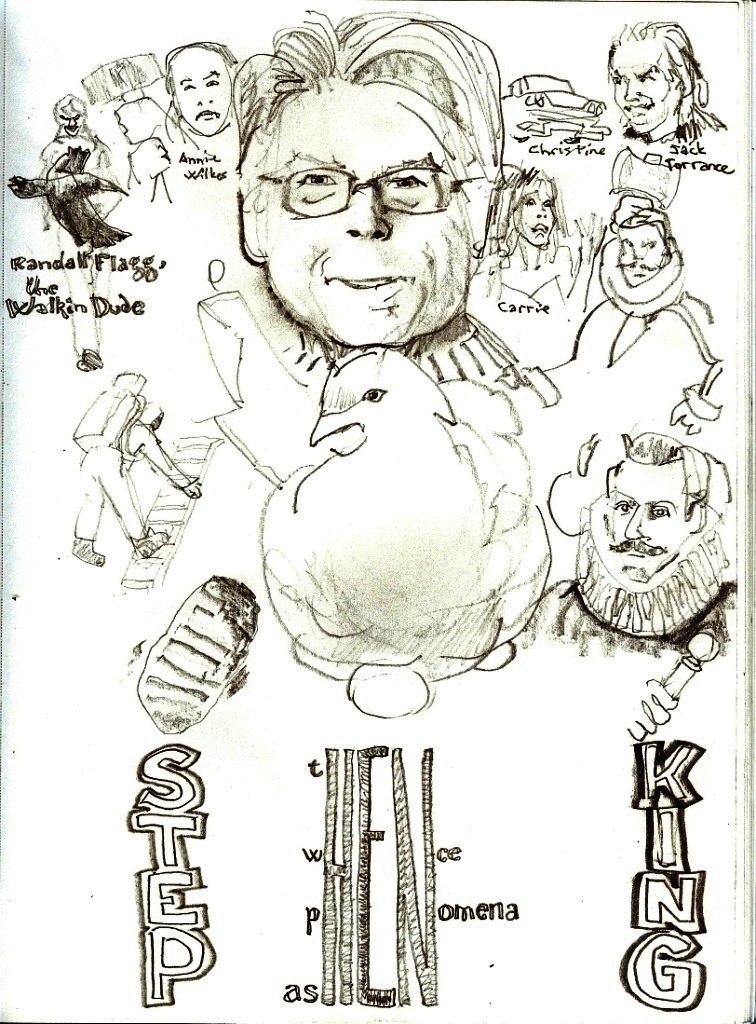
Naturally I want to pay some sort of tribute to a man who’s provided me with numberless hours of imaginative entertainment. A few days ago I got this far with a draft of the Stephen King page:

Image

This draft was doomed, but I felt bad scrapping it: I really liked some of the character portraiture, and since I’m an erratic portraitist, when I get it right it breaks my heart not to use it. So here it is.

And here are the words to the acrostic:

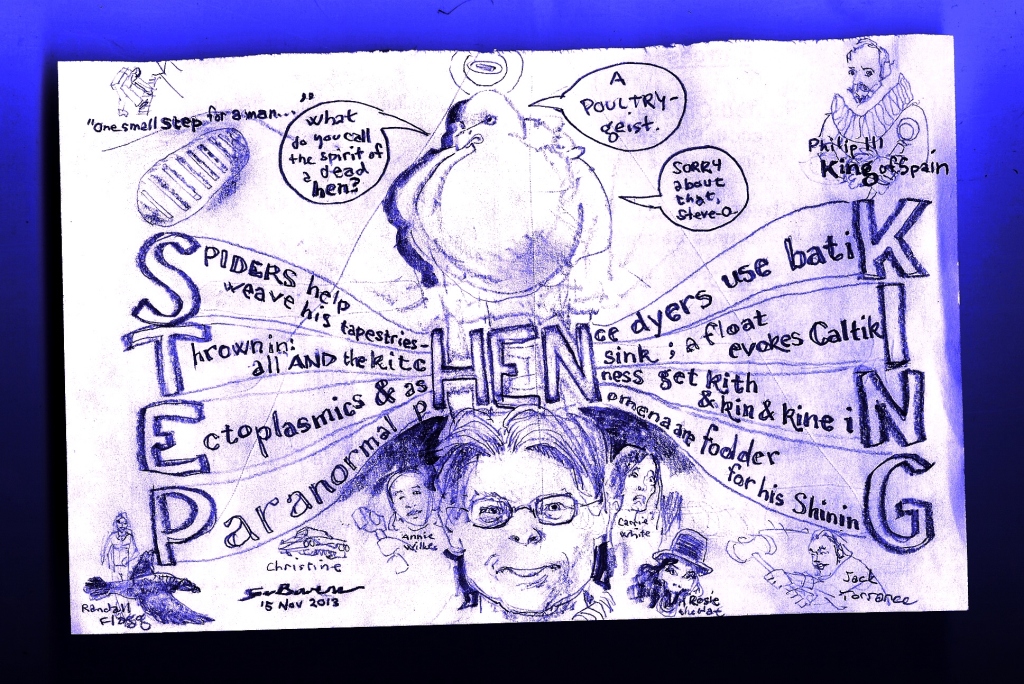
SPIDERS help weave his tapestries–hence dyers use batik
Thrown in: all AND the kitchen sink; a float evokes Caltiki
Ectoplasmics & ashenness get kith & kin & kine
Paranormal phenomena are fodder for his Shining

Caltiki? Well, there’s a bad half-Italian movie of the late 50s entitled CALTIKI –THE IMMORTAL MONSTER (or, when in Rome: CALTIKI — IL MONSTRE IMMORTALE) that I’d be willing to bet 500 to 1 Stephen King has seen. He’s got a similar flesh-devourer in one of his short stories; it floats by an anchored raft. (It’s dissimilar enough to be considered an independent creation, though.) The name of the King story escapes me.

Steve, if you ever see this, I echo my apologetic chicken regarding the awful “poultry-geist” joke. I needed to fill up the space. Keep up the good work, man.

Image

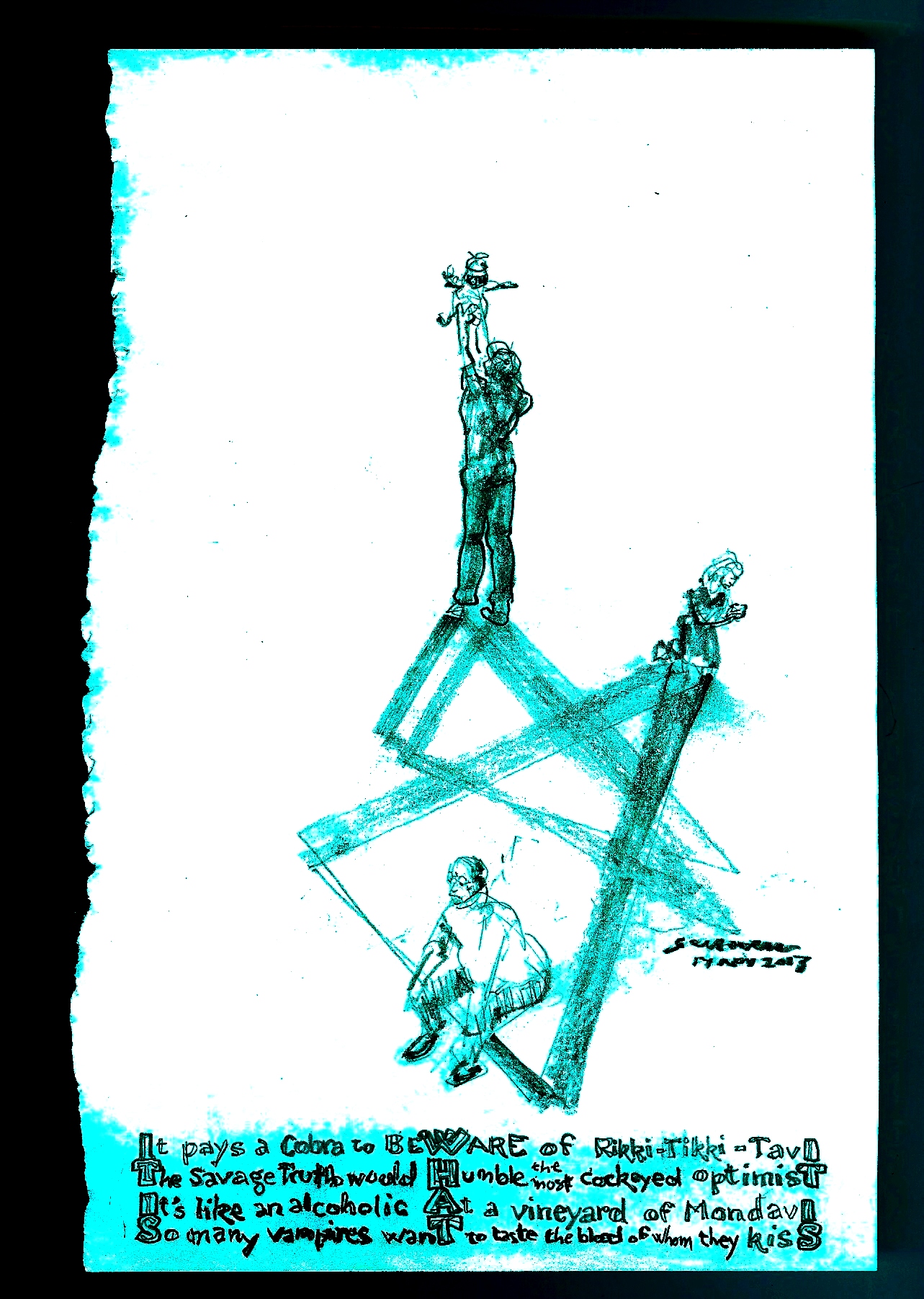
Ayn Rand must be turning over in her grave. A long time ago, she proclaimed that A equals A. Now people everywhere are saying “It is what it is,” and not giving Ayn any credit. (Nor, to my knowledge, did John Prine tip his hat to Rand when he put “You are what you are, and you ain’t what you ain’t” in his lyrics to “Dear Abby.”)

“It is what it is” is a semantically empty phrase that usually (in this neck of the woods, anyway) connotes that something not-great but unchangeable exists. As Robert Heinlein was wont to say, “You can’t argue with the weather.”

So why use it for an acrostic? Well, ten years from now it will remind me of the way people were talking ten years ago. (Fifty years ago, kids my age were calling Cool stuff Boss. Cool survived; Boss died.) Also, the end-letters work out fairly well for acrosticization, and enabled a reference to Rikki-Tikki-Tavi, heroic mongoose of the Kipling oeuvre, as well as the Robert Mondavi vineyards, which I was privileged to visit in the mid-80s, enjoying their five-course meal accompanied by five different wines.

Here are the words to the triple acrostic:

It pays a Cobra to BEWARE of Rikki-Tikki-Tavi
The savage Truth would humble the most cock-eyed optimist
It’s like an alcoholic at a vineyard of Mondavi
So many vampires want to taste the blood of whom they kiss

Rummaging through the image archives I found a spate of portraiture tries from five years or so ago. These are the best of a not-all-that-good bunch.

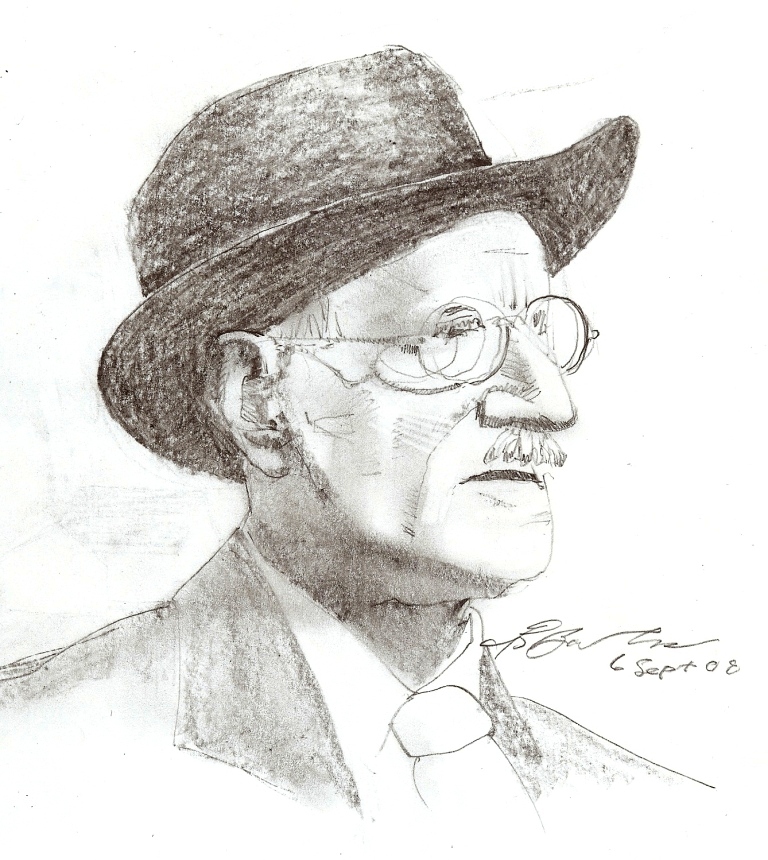
Here’s James Joyce:

Image

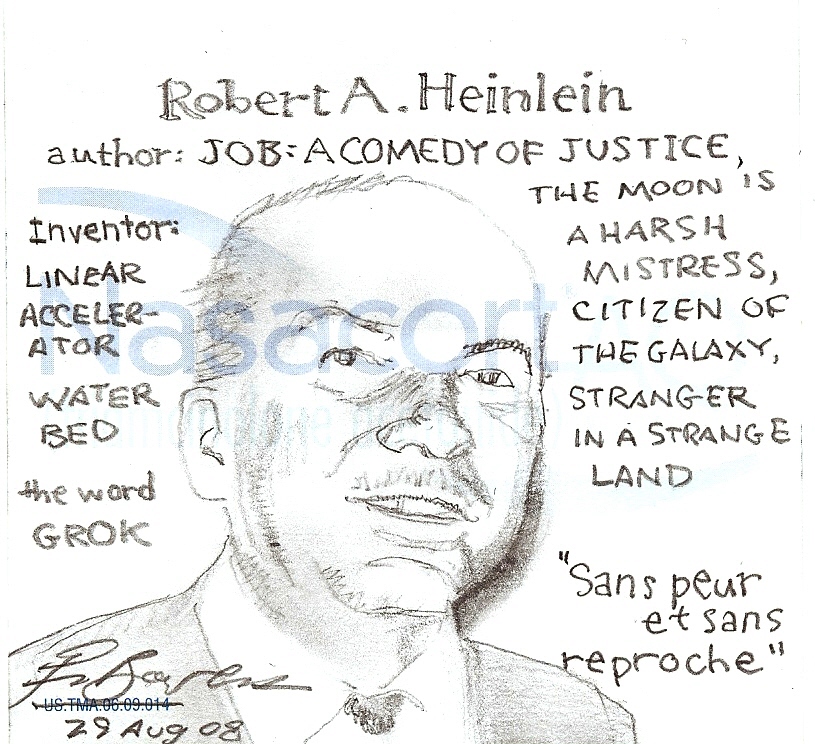
Robert Heinlein:

Image

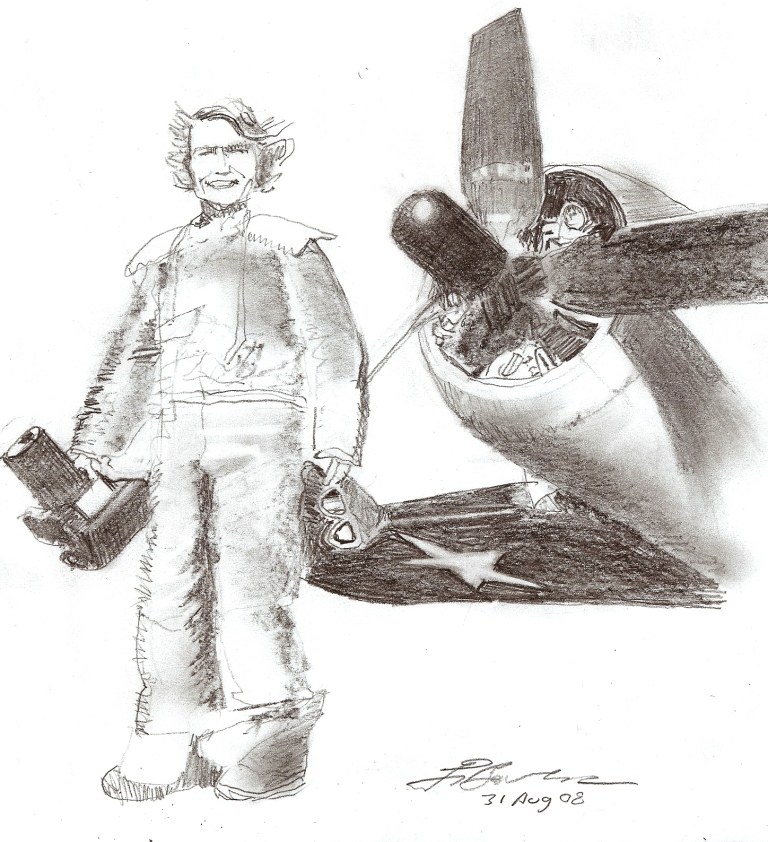
Margaret Bourke-White, with a seeming touch of Clint Eastwood:

Image

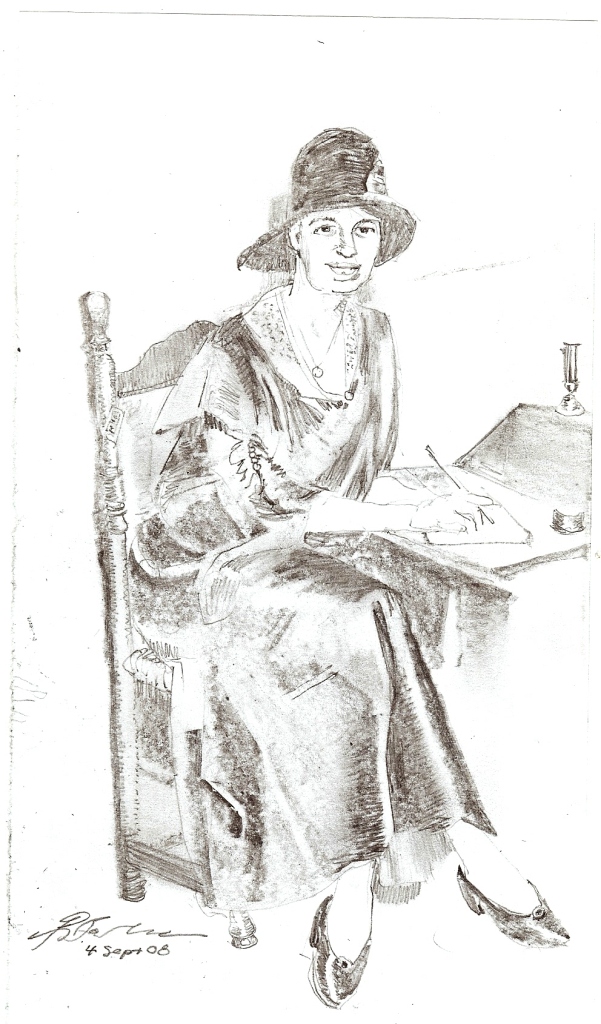
Eleanor Roosevelt:

Image

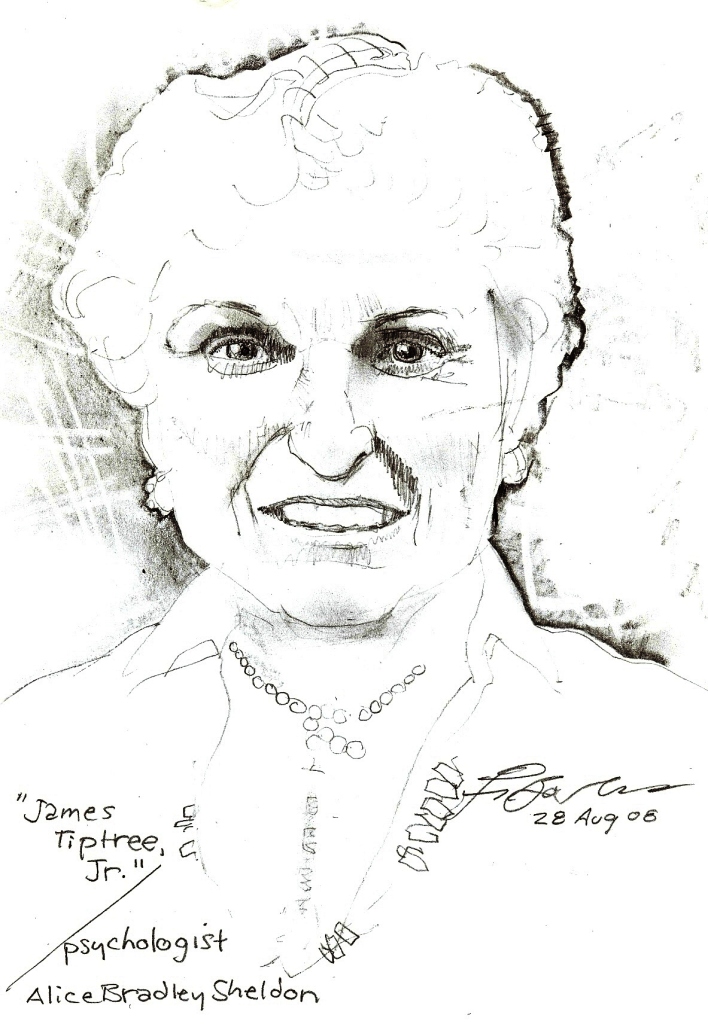
The enigmatic and tragically-overlooked Alice Sheldon, alias James Tiptree, Jr.:

Image

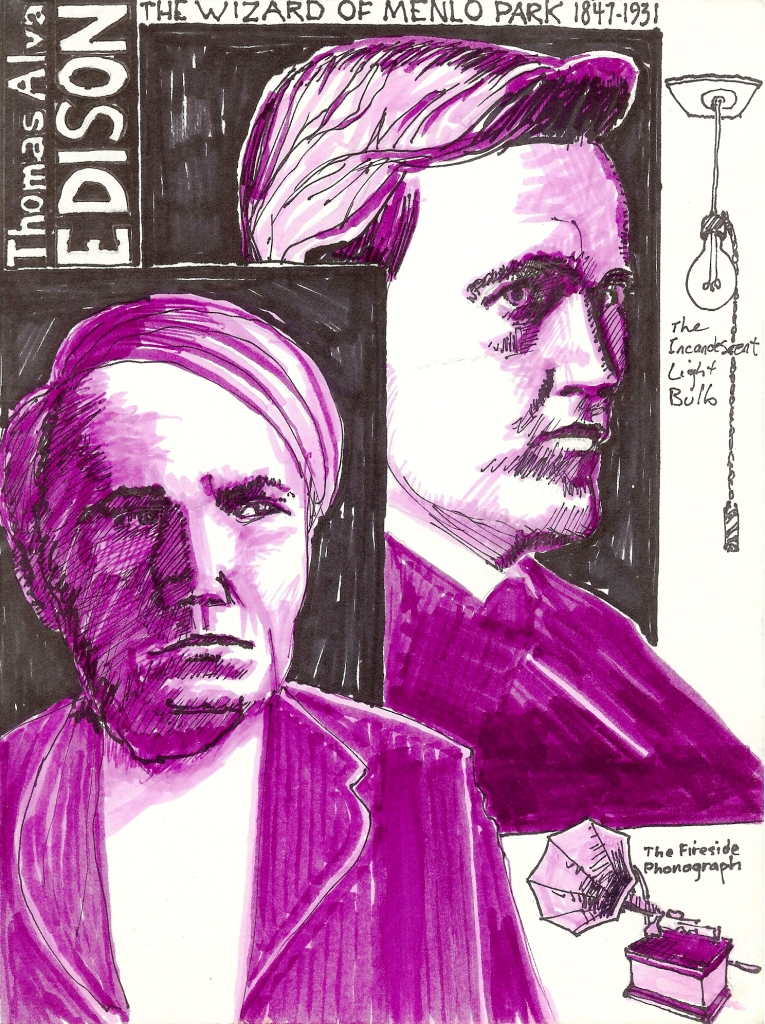
The prolific inventor and thug hirer Thomas Edison:

Image

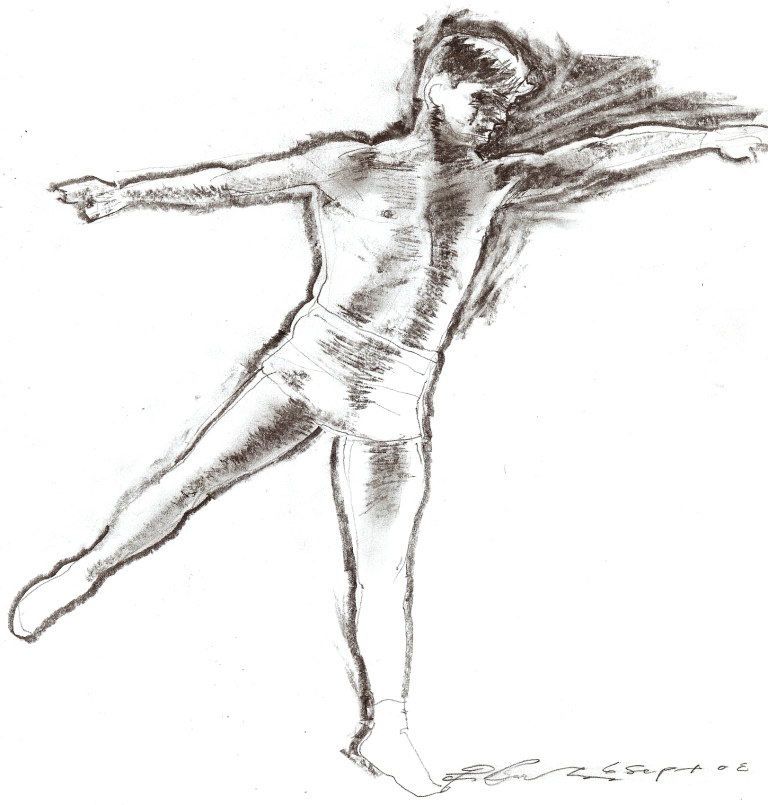
And, last but not least, the physically driven, self-sculpted Mikhail Baryshnikov:

Image

The drawings, though all flawed, represent the work it has taken to make what I do now, though flawed, less so with time and trouble. The best two-word advice for the art student, courtesy of stellar artist and sensei Darlene Goto, is “SLOW DOWN!;” the best three-word advice, available through the public domain, is “Practice, practice, practice.”

Image

I borrowed the title for this post from a book called ANYTHING CAN HAPPEN, an account of the first years in America of George Papashvily. It was his chapter about the United States military in favorable contrast to the Czar’s Army.

Yesterday’s post also involved the American military, but I felt there was more to say.

Long ago Robert Heinlein was invited to contribute to a radio program called “This I Believe.” His radio address may be found in EXPANDED UNIVERSE and also in GRUMBLES FROM THE GRAVE, and an audio may be found on the Internet if you look well enough. Quoth Heinlein, among many other things: “I believe in Rodger Young.”

Here’s a link to find out why: http://en.wikipedia.org/wiki/Rodger_Wilton_Young

Image

My grandmother unintentionally stymied and stumped me time after time with the simple question, “What do you know for sure?” She left us in early 1979; if she were here now I would still be stumped, but might glib it off with, “Well, Gran: A long time ago…there was this BIG Explosion…”

Over fifty years ago Robert Heinlein wrote a Russia-critical article entitled “PRAVDA Means TRUTH.” He and his wife Virginia had just returned from the Soviet Union; they happened to be there when American spy pilot Francis Gary Powers (no relation to your humble narrator) was shot down, or otherwise forced down, over Soviet airspace. Heinlein took it upon himself to write an apologia (emphatically NOT an apology; rather, a defense) of the US spy mission Powers was conducting, and of spying as a way of leveling the Cold War playing field. The title of the article was meant ironically; Heinlein scorned the idea of anything remotely approaching truth in (the Soviet newspaper) Pravda.

To his credit, Heinlein later acknowledged that it is hard to find truth anywhere, including Time Magazine. But he’d written his article in the heat of the moment, after what he regarded as shabby and hypocritical mistreatment by the Soviets. (Interested parties may find the article in Heinlein’s Expanded Universe.)

Anyone heard of the Pentagon Papers? Great. Anyone know what was IN the Pentagon Papers? Me neither–but I cheated by looking it up on Wikipedia, which says that the Johnson administration lied to the American public and to Congress about the extent of our involvement in Vietnam and surrounds. Anyone surprised? Anyone surprised that the Pentagon Papers in their entirety–not just the juicy parts Daniel Ellsberg leaked to the New York Times–were not declassified and made available to the public until 2011?

Smithsonian.com has a great article entitled “Nine Historical Archives That Will Spill New Secrets.” Such is the nature of some sealed documents, that some of the information therein might embarrass people still living…

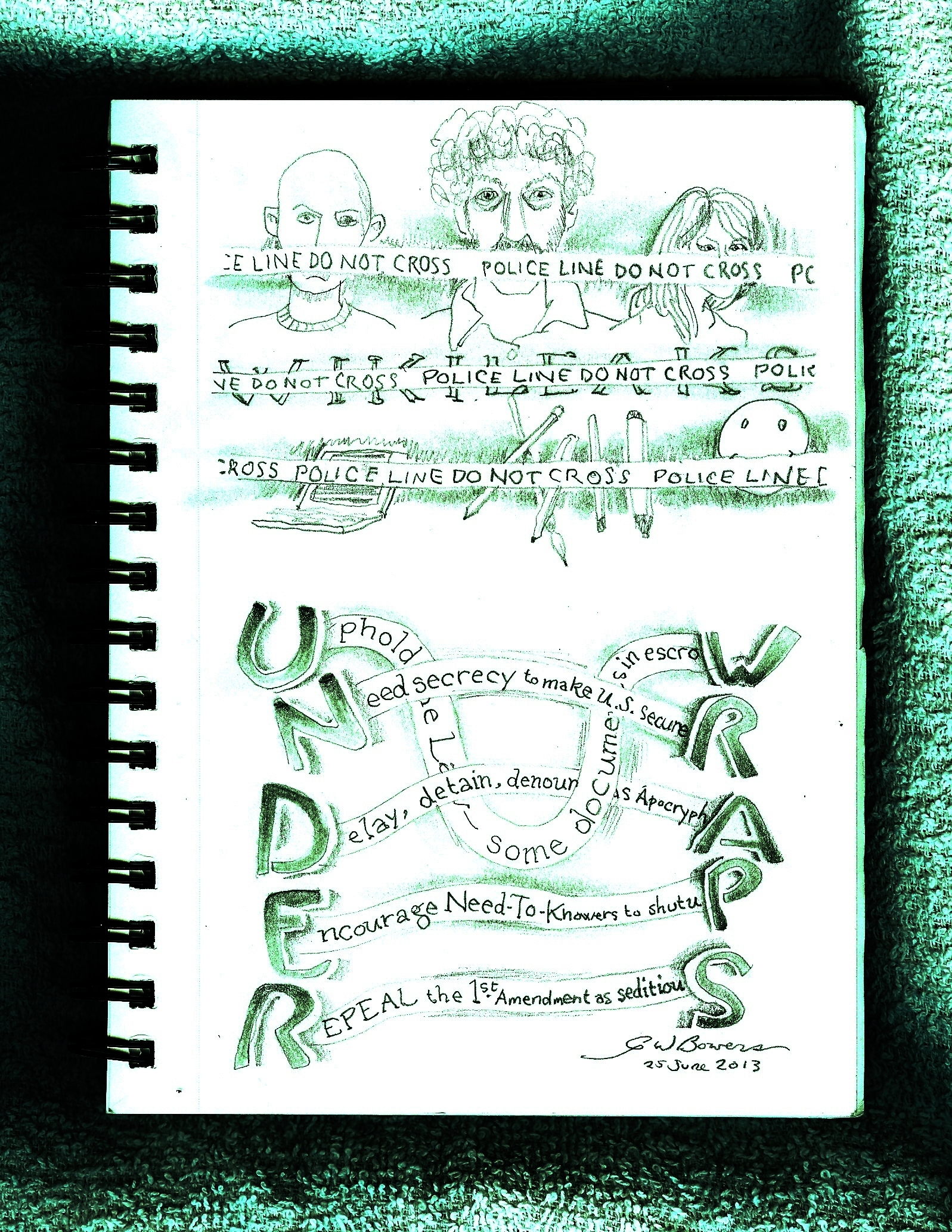
Here are the words:

Uphold the Law–some documents in escrow
Need secrecy to make U.S. securer
Delay, detain, denounce as Apocrypha
Encourage Need-To-Knowers to shut up
REPEAL the 1st Amendment as seditious

–And of course I suggest nothing of the sort.

Historical note: As of this writing a fellow named Snowden is fleeing U.S. jurisdictional space for having spilled some beans in a possibly-indictable way.

Image

A limited copyright is hereby granted to any reader who wishes to print a copy of the image so as not to strain her or his neck and/or eyesight reading the darn thing. It will not be transcribed. My rationalization of not going to the trouble of transcribing it is that it is best experienced in situ.

For those of you who do not know what a shaggy-dog story is, and do not want to go to the trouble of doing an Internet search to find out, this: a shaggy-dog story is a story whose punchline is some awful pun, for the sake of which the story was built. This is not a shaggy-dog story, but a shaggy-dog PARABLE, and my hope is that it has more reward to the reader than the pun at the end. For a similar reason (I think), Robert Heinlein wrote JOB: A COMEDY OF JUSTICE, and Homer of yore told the long story we call THE ILIAD and THE ODYSSEY by way of demonstration that Deities play with our lives, for ends that disregard ours.

Image

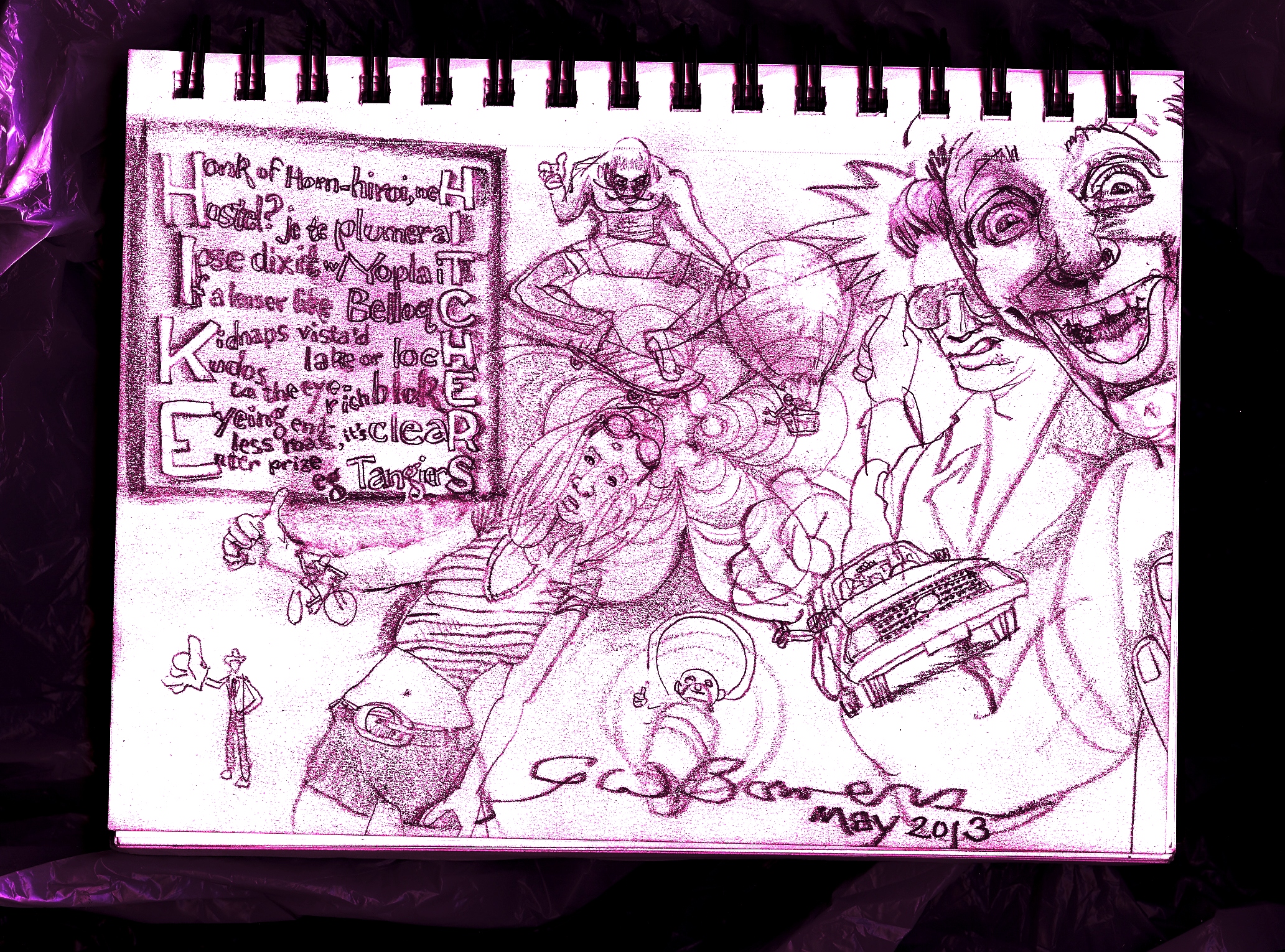
Robert A. Heinlein wrote a book called THE MOON IS A HARSH MISTRESS and with it brought into the world TANSTAAFL, which stands for “There ain’t no such thing as a free lunch.” A few years later one of his disciples, Larry Niven, invented Ringworld, and with it the curse word “tanj,” which stands for “There ain’t no justice.” Hitchhiking, or “Hikehitching” as I’ve switcherooed it, doesn’t ever involve a free ride. Hikehitching costs time, dignity, and personal safety. I only did it once, and only because I was desperate to see my then-girlfriend. It was rugged and took forever, just to get from Glendale, Arizona to Tucson.

Here are the words to the acrostic (an explanation will follow):

Honk of Horn–hiroi, neh
Hostel? je te plumerai
Ipse dixit with Yoplait
If a lenser like Belloqc
Kidnaps vista’d lake or loch
Kudos to the eye-rich bloke
Eyeing endless roads, it’s clear
Enter prize eg Tangiers

“Hiroi, neh” is a Japanese phrase meaning, approximately, “That’s harsh, isn’t it?” I learned the phrase from the then-girlfriend I was hikehitching to.

A hostel is a cheap accommodation often used by hikehitchers.

“Je te plumerai” is a French Canadian phrase meaning, approximately, “I will pluck you.” It’s in the unbelievably violent song “Allouette.”

“Ipse dixit” is a Latin phrase meaning, approximately, “The thing speaks for itself.”

Yoplait is a brand name for a soupy yogurt, usually fruit-enhanced.

John Ernest Joseph Bellocq was a pioneering American photographer who took pictures of opium dens in New Orleans’ Chinatown, and prostitutes in New Orleans’ Storyville. He was quite the lid-lifter. The movie PRETTY BABY fictionalizes some of his exploits.

A loch is like a lake but localized. (I sure love building sentences like that.)

Kudos means “praise.” It is singular, but is as badly misusaged as “au jus.”

“Enter prize” is a cheap punnification of “enterprise.”

“Eg” is an abbreviation of “exempli gratia,” a Latin phrase meaning, approximately, “for example.”

Tangiers is an exotic place referred to by Bob Dylan in his song “If You See Her, Say Hello.”

I drew several hikehitchers, iconic, supernatural, conventional, ironically unneeding of transport (eg the passenger in the speeding car), messianic, and hickish (the cowboy in lower left). Not only do all of us, as Dylan has it, “Gotta serve somebody,” but we all want some kind of ride.