Archive

Tag Archives: T. S. Eliot

2022 0315 inner workings

Long ago T. S. Eliot said “Our beginnings never know our ends.” And much longer ago, legend has it, Alexander the Great anticipated the Indiana Jones scene where Indy, menaced by a guy brandishing a fearsome, whirling array of sword steel, shrugs, takes out his gun, and shoots the guy. But in Alexander’s case it was a complicated knot that no one had the wit and dexterity to untie. Alex shrugged, whipped out his sword, and hacked the knot into non-knottedness. It was both a naughty and an unknotty thing to do, but it solved the problem and left the rest of his afternoon free.

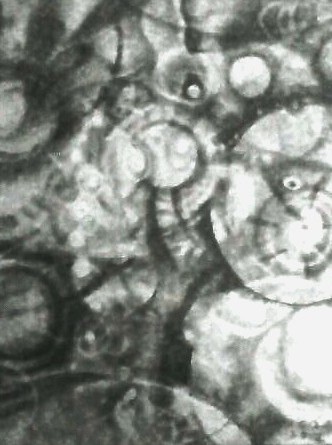
Earlier today I had a complicated work in progress, and showed Facebook and Instagram folks what I was up to, thus:
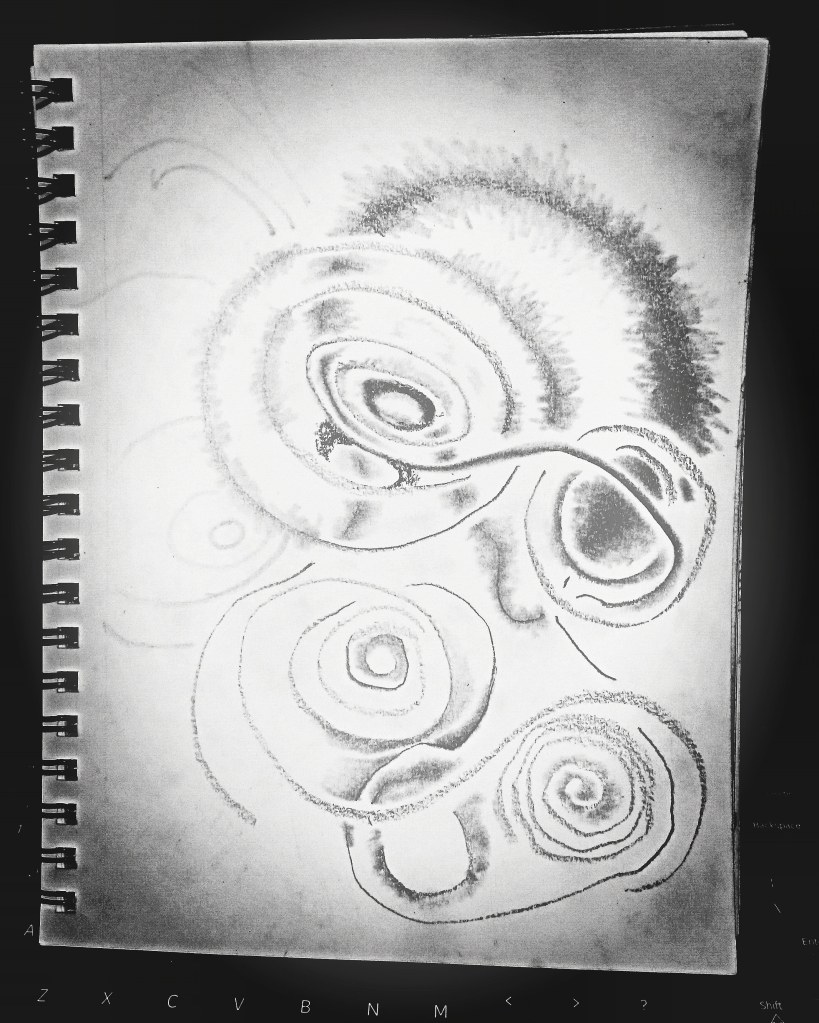

I captioned the above image with this: “Here’s a drawing in an early stage, with some photoediting. It might be called “non-objective” but human beings can’t help objectifying everything from cracks in the sidewalk to clouds in the sky. ‘That looks like…’ starts many a sentence in an art museum. Faced with the blank page, I asked my hand and carpenter’s pencil to show me something that evoked Energy and Connectivity. An hour later here we are, and the drawing is starting to tell me what it needs, and asking me: Remember the vapor trails out of White Sands? Remember the motion of the caterpillar’s tiny legs? Can you wrap a few tendrils around this form, and give that spiral over there a hint of majesty?”

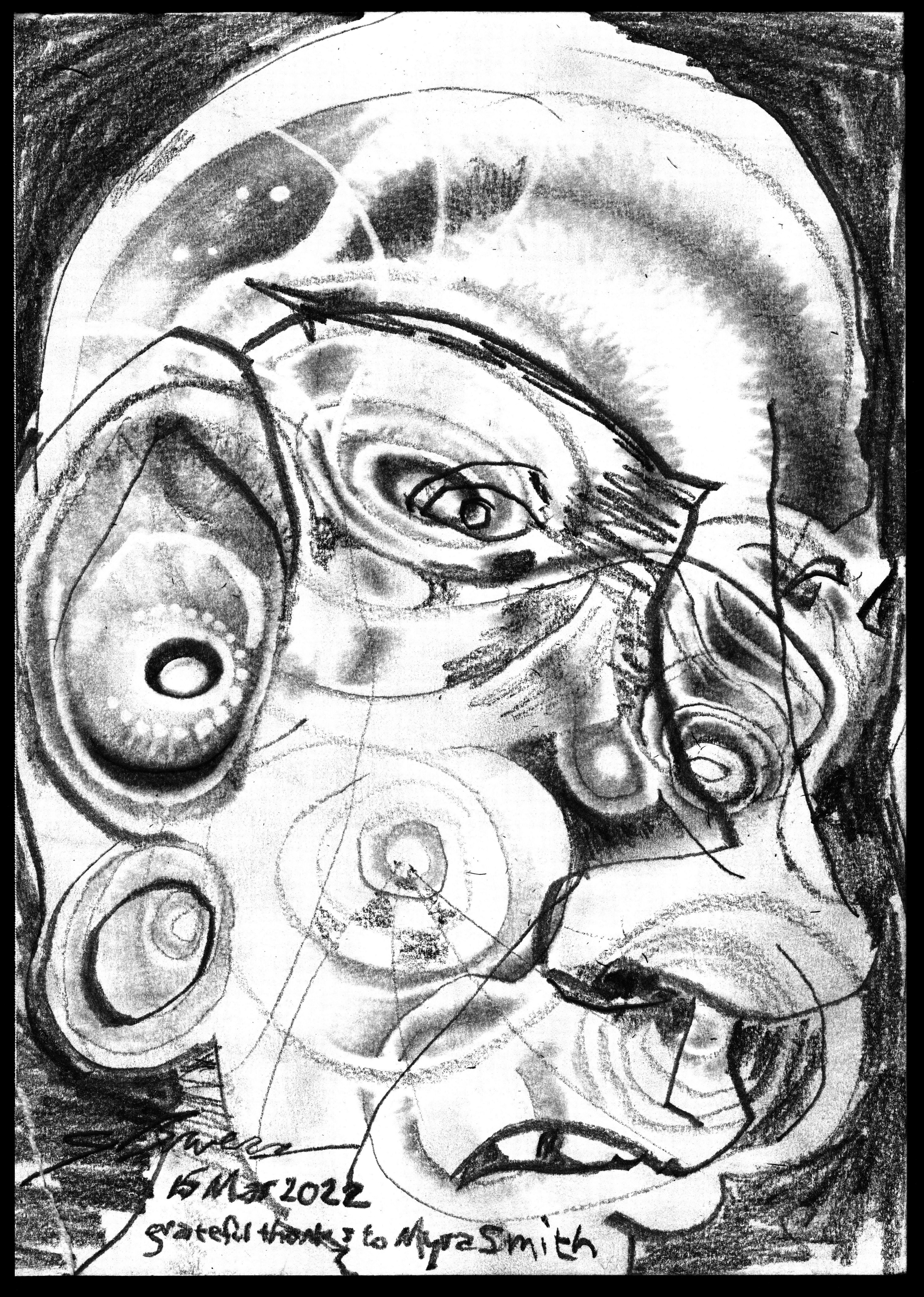
Minutes later, my music-loving, fellow 2D artist friend Myra Smith responded: “I thought inner workings of a human ear,” and my instant, flip response was “Huh?” But even as I was being a smart-aleck, that potent phrase “inner workings” resonated, echoing between my human ears. I loved it as a title. And I loved it as a quick, Cut The Gordian Knot solution to the work in progress: superimpose a face on this swirly stuff, tweak the drawing a little, and call it a day.

My thanks to Myra for some superb, catalytic conversion.
20211113_085847

Breaking a fast of a night full of dreams In a well-conceived ripping of old-notion seams Haunts a bachelor’s kitchen with ethery steams And wreaks chop-happy havoc on thought-laden streams. In other words, when I woke up after dreaming about friendship and loyalty, with the (not original with me, I’m sure, but there it was, echoing away) phrase “some friendships never die until both friends have died” looping in my head, I lurched into the kitchen, found some items that would suit, and prepared a meal while looking with a strange lens at what I was doing.

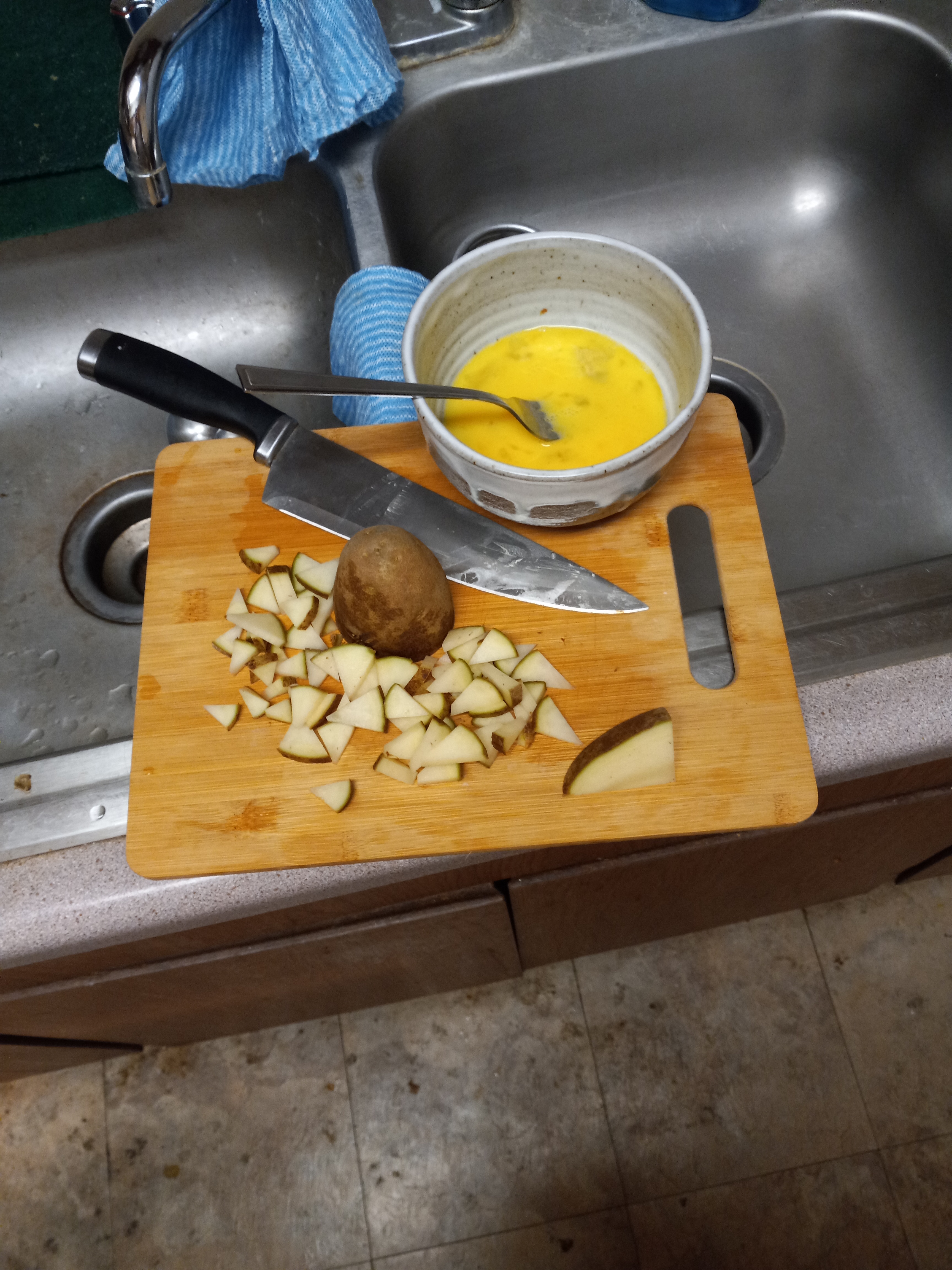
Recently I read T. S. Eliot’s “The Waste Land.” I don’t pretend to fully understand it. There are helpful footnotes and biographical material in the edition I own (Penguin Classic, The Waste Land and other Poems, edited and with an introduction and notes by Frank Kermode, purchased at the amazing The Book House in St. Louis, Missouri, Eliot’s home town) but the sense of Eliot’s focus choices still eludes me. I see and touch the parts of his poetic elephant without getting a good, wide-angled, aerial-photography look at the elephant itself. Time, research and thought will take care of that, I trust. Meanwhile I’m in the kitchen, a bit sleep-befuddled, under a slight Eliot influence. As I start chopping the potato I think of how much better it would be to say “There’s more than one way to chop a potato” than “There’s more than one way to skin a cat.” Those poor cats!!! (In St. Louis I spent several days in the company of my cartoonist/poet friend Russ Kazmierczak and his significant other, the cat-adoring Missy Pruitt. I like cats myself, but Missy has devoted a portion of her life-energy to the welfare of cats on a scale beyond most of us.) (If T. S. Eliot had never existed, the play Cats would never have existed either, and Paul Newman would never have gotten up in his seat in the audience of “The Late Show with Letterman” and demanded, “Where the Hell are THE SINGING CATS??!” Thoughts don’t come out of nowhere.) (Russ K is a huge Letterman fan. I’m hoping this passage will bring him a smile. Russ is a huge Missy Pruitt fan too. If Eliot were writing this, he would make less sense but be much more eloquent.)

Anyway, I ended up chopping the potato unconventionally. I did half in thin slices of wedges, a third in discs, and the rest just a home-fries chopchop. And I made a staged potatoscape and thought of what potential the right painting of the scape would have in elbowing its way into the Museum of Modern Art.

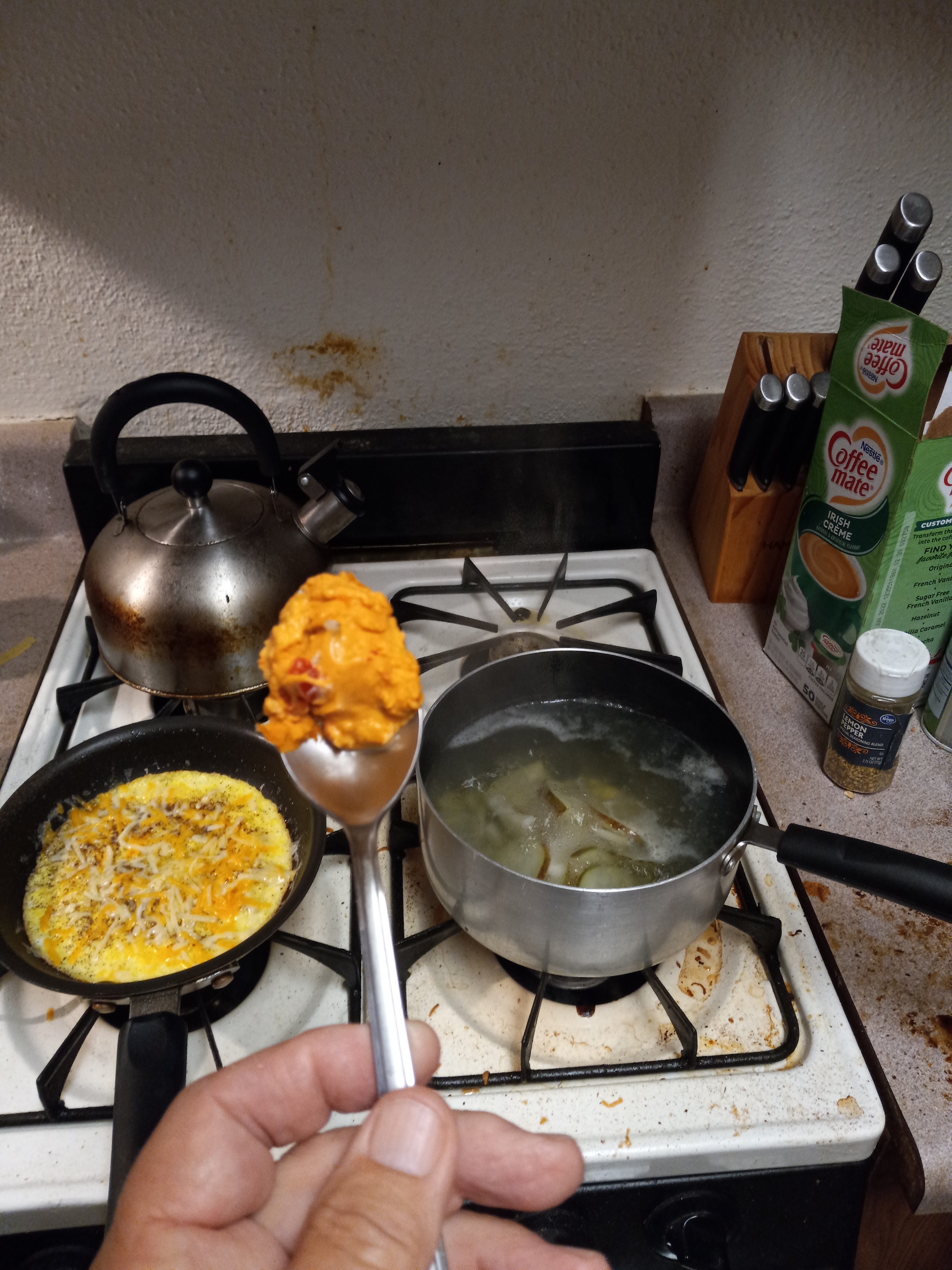
20211113_091704

Potatoes need company. This one was accompanied by slow-sautéed scrambled eggs, topped by Mexican-style blend grated cheese and surprise guest red-pepper-enhanced hummus, applied to the surface of the melting cheese using a two-spoon technique I invented for the occasion. I’d never used hummus as an ingredient before, and I may not have if I hadn’t been addled by dreams and haunting Eliot allusions, but no regrets: it was just the right amount to add a red-peppery tang. Having eaten, I am now a slightly different person than I was before I woke: slightly better nourished both by foodstuffs and by eerie, arty, Eliot-laced musings. May you, Friends, find just the sustenance and musement you yourself need today!

20211108_153735

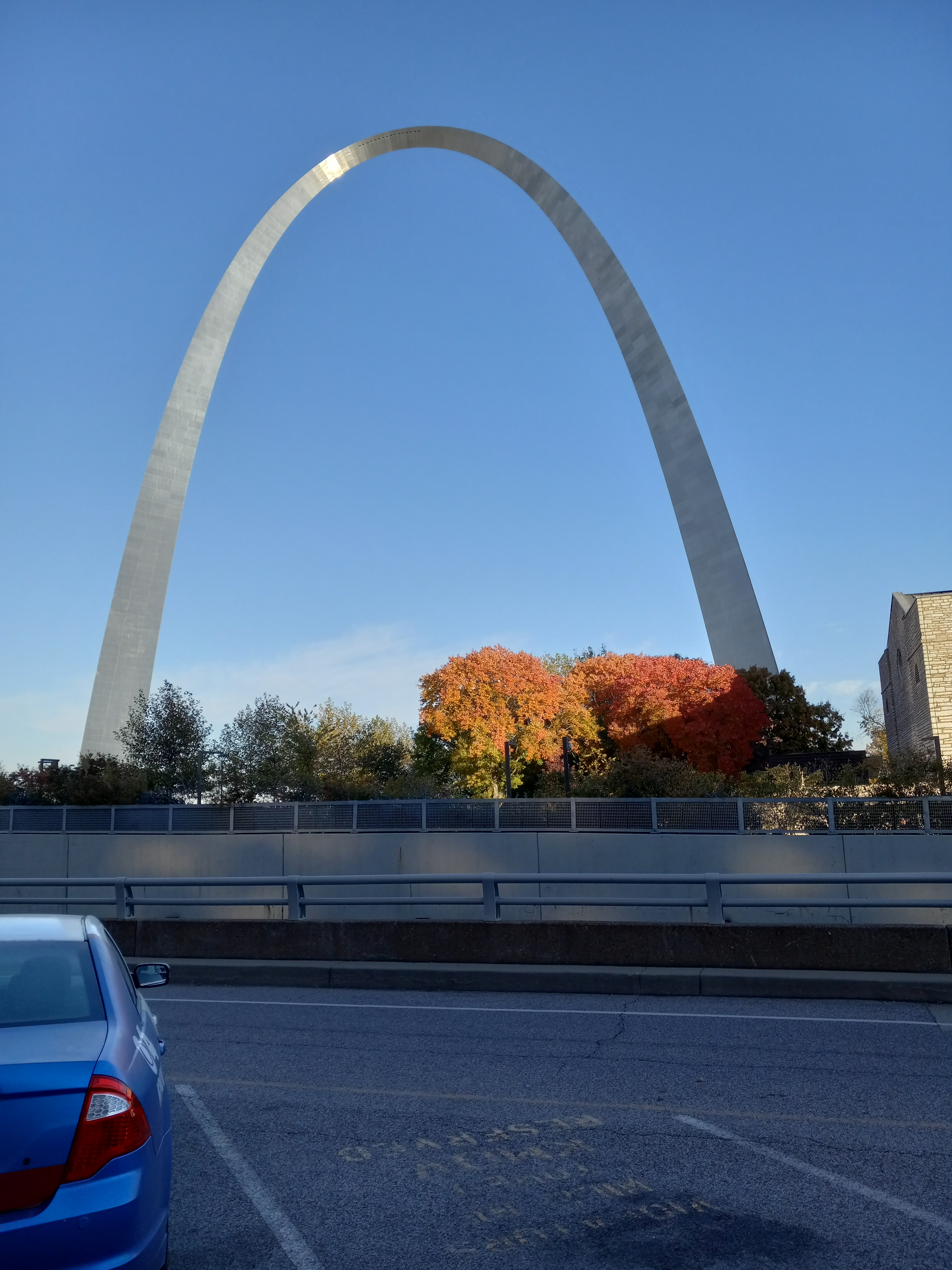
I’m in Saint Louis, Missouri, on an adventure. And when I told my friends about it, poet Perry Sams observed that both T. S Eliot and William S. Burroughs were born here. Yesterday that sprang to mind when I went on a pedestrian pilgrimage from where my traveling companions and I are staying to the majestic St. Louis Arch. Suddenly the passage from Eliot’s “The Love Song of J. Alfred Prufrock” superimposed itself on my closeup sight of the Arch: ” . . . To lead us to an overwhelming question . . .” And the Arch was telling me that such as question will be an overARCHING question as well.

20211108_143736

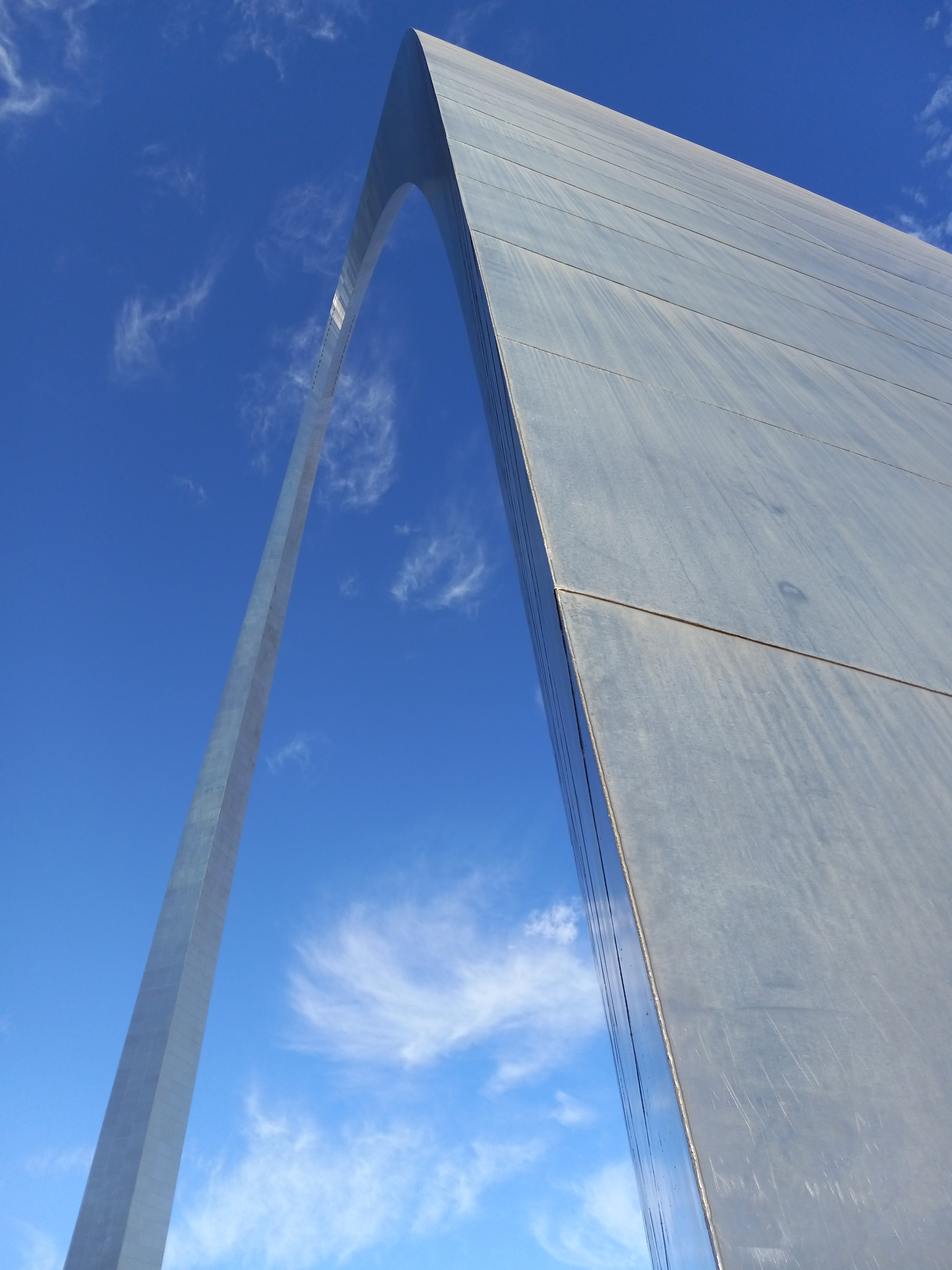
The Arch communicates nonverbally. It may be asking if “What goes up must come down” is valid, or if a gleaming tribute to parabolas is its own reward, or if large-scale focal points of attention may enhance a global psyche. A true Overarching Question might endure over time and cultural change.

20211108_144041

Reader, I invite you to ask your own Overarching Question. You have lived long enough to ponder and wonder. What question keeps you awake more than any other? What issue would make you happiest if resolved?

And I further invite you to imagine putting that question to the Arch Itself, just to see what happens. It costs nothing, and, who knows, the Arch may have something to convey. It certainly spoke to me, though not in words. And it made me smile.

20211108_143832

What is it?

Image

The underwhelming answer: It is a drawing I made with graphite sticks while trying to have as blank a mind as managed. But it is also one way to illustrate “The Love Song of J. Alfred Prufrock” by T. S. Eliot. Eliot’s poem also refers to an overwhelming question–and then then next line admonishes, “Oh, do not ask, ‘What is it?'”

So one way to answer–or ask–an Overwhelming Question is to make something wordless, that gets people wondering how or why it came to be. Since your mission is accomplished with the asking, you need not provide an equally overwhelming answer.