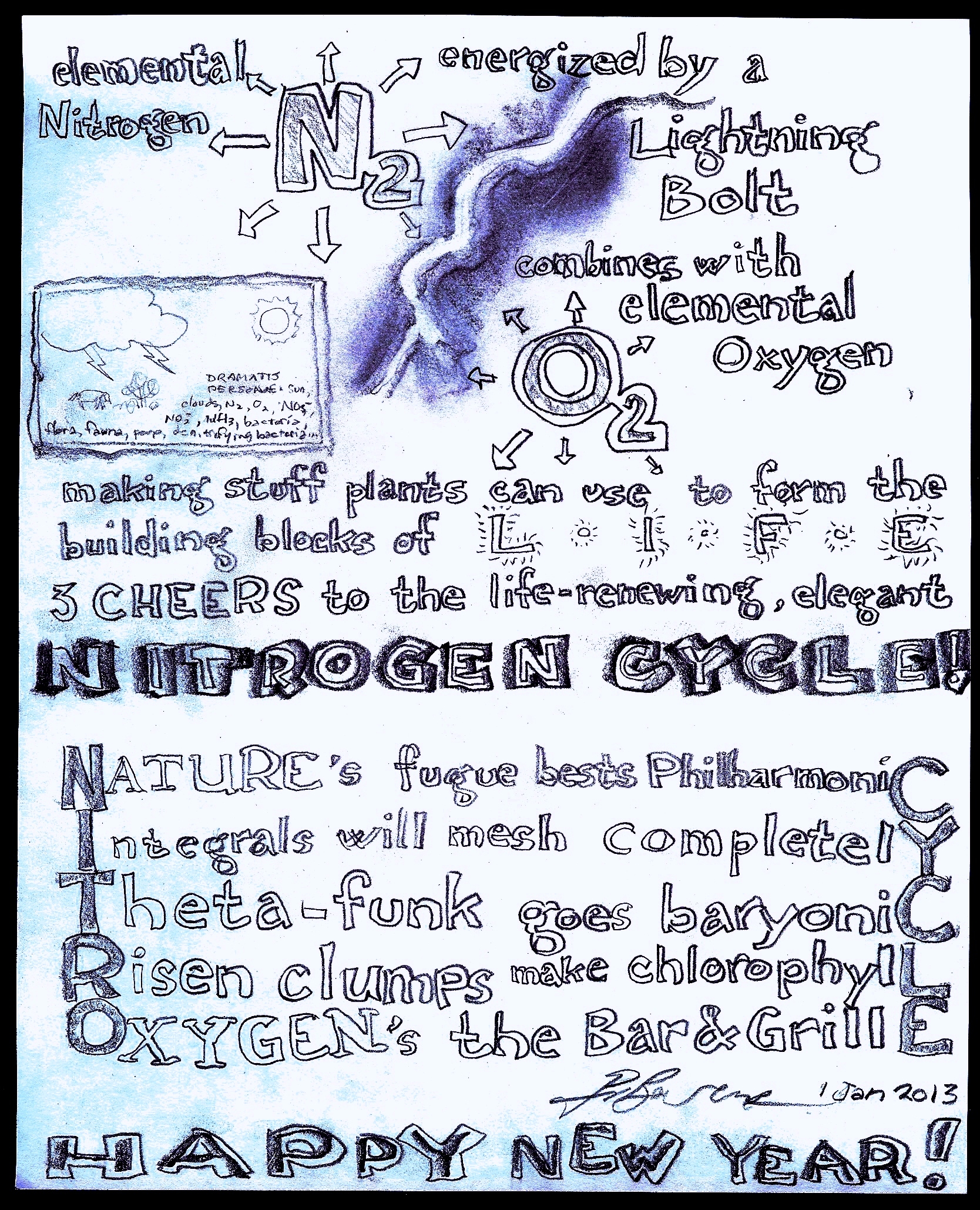
I have spent much of the first three hours of this New Year creating a new page. I wanted to celebrate the new year by doing a renewal-themed page. The ultimate celebration of renewal to my mind is a brass-tacks look at what actually happens to perpetuate Life. I had to leave out stuff like the exploding supernovae that make heavier elements occur in the first place, the absolutely essential floatiness of solid water, a.k.a. ice, and many other factors known and unknown. I stuck to the Nitrogen Cycle, and an obscenely simplified rendering at that, but I invite readers to do a web search on “nitrogen cycle” and find out what Life is REALLY all about, and why we would never exist without Lightning. Happy New Year, friends!
Image

PS: “Theta-funk” is a horrible corruption of “Theta functions,” essential to the mathematics of string theory. Once William Buckley was asked why he used the word “irenic” instead of “peaceful.” He replied, “Madame, I desired the extra syllable.” Well, messieurs et mesdames, I desired Theta-funk. 🙂
Image

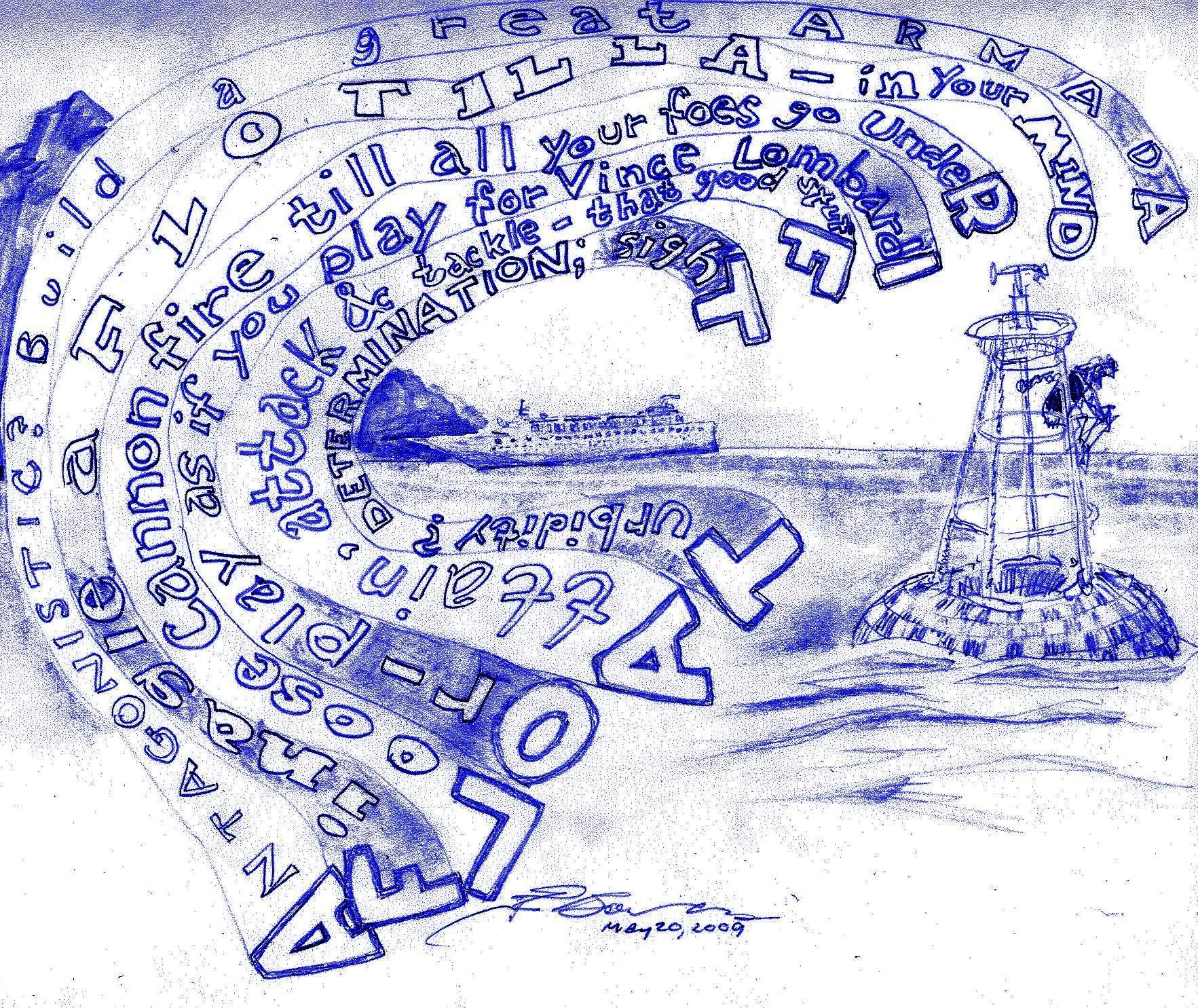
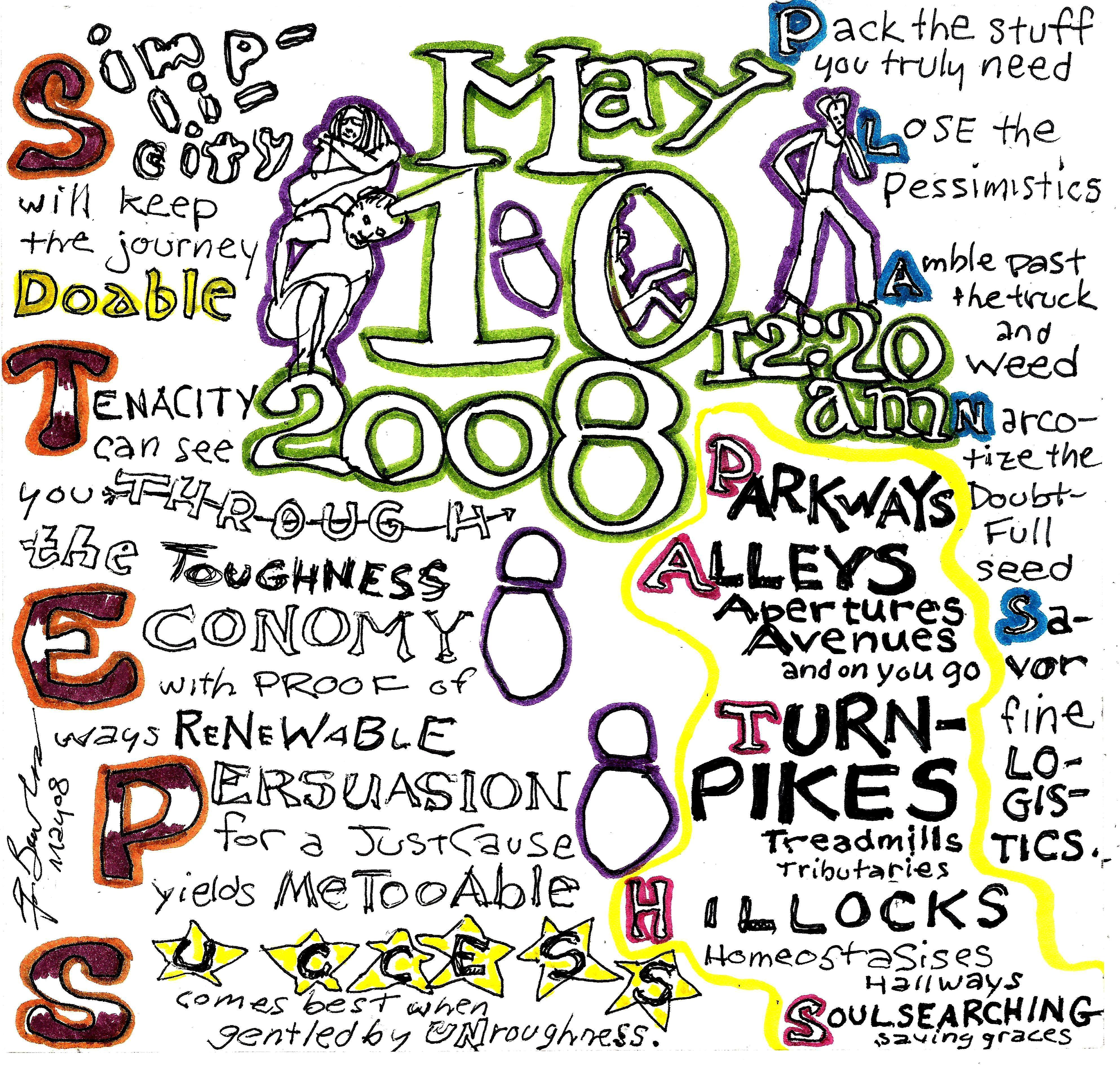
It is natural on New Year’s Eve to reassess, evaluate, and resolve to change certain things. It’s less conventional to do it on the 10th of May, but that’s what happened in 2008 for me, as pictured above. Back in May of 08 my journal pages featured the date more prominently. Later that same year, as seen below, the date became a footnote to my signature. Judging from the message of the page, it must’ve been a bleak November…

Image

But 2012 has been far from bleak. I leave it in better health than I entered it, and with love and light abounding, and 2013 promises yet more transcendence. Reader, may your 2013 be your best year yet.

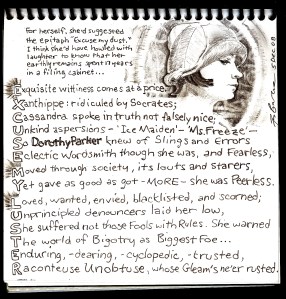
Dorothy Parker thought “Excuse My Dust” would be a fine epitaph. Had her spirit persisted after her death, and hung around Earth to see what happened to her Earthly remains, I think she would have howled to see that her Earthly remains somehow ended up in a filing cabinet for seventeen years.

She had an incomparable wit. I am sorry to have never met her. I pay my respects by paging her with a sonnet.

dorothy parker

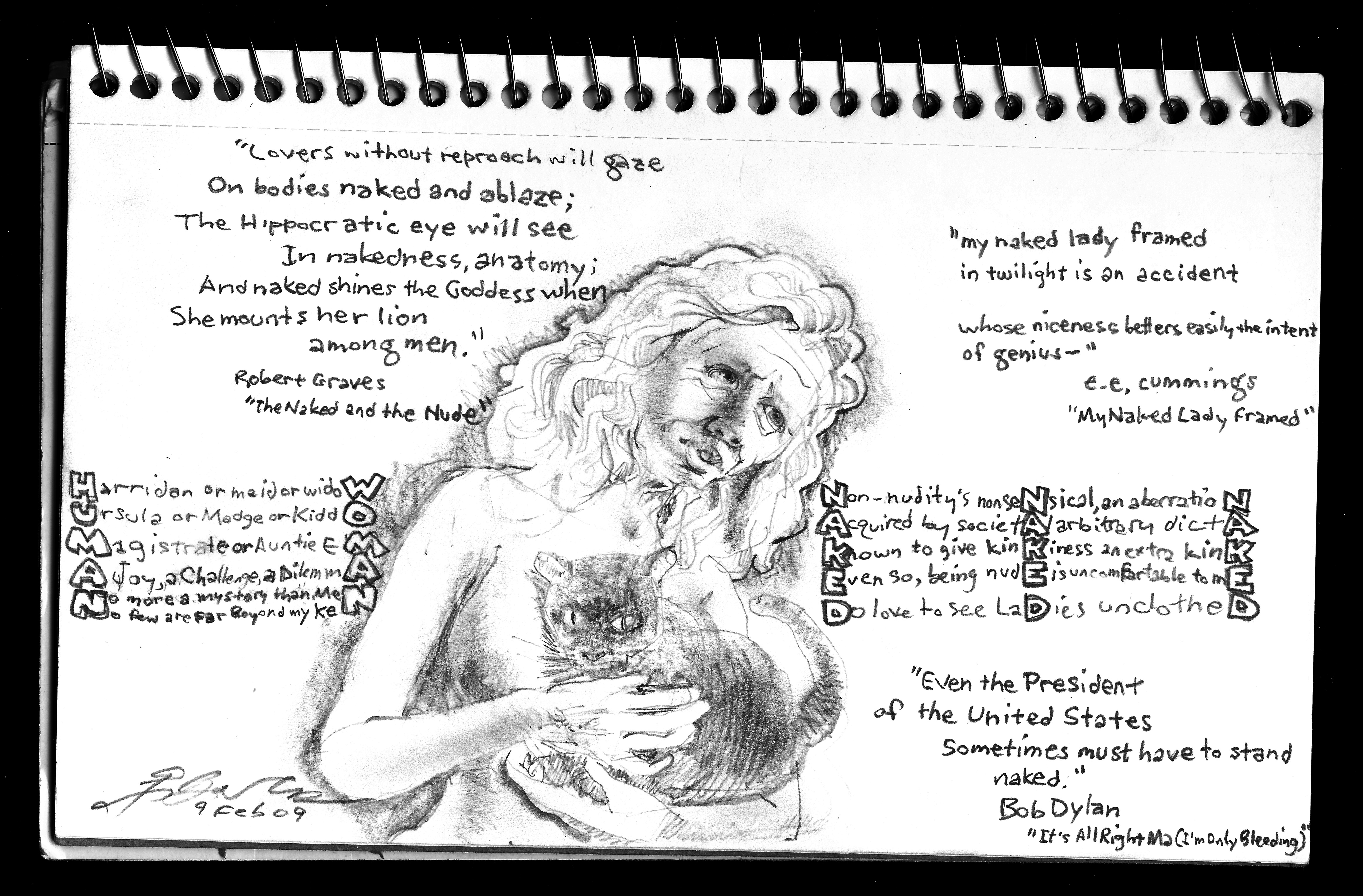
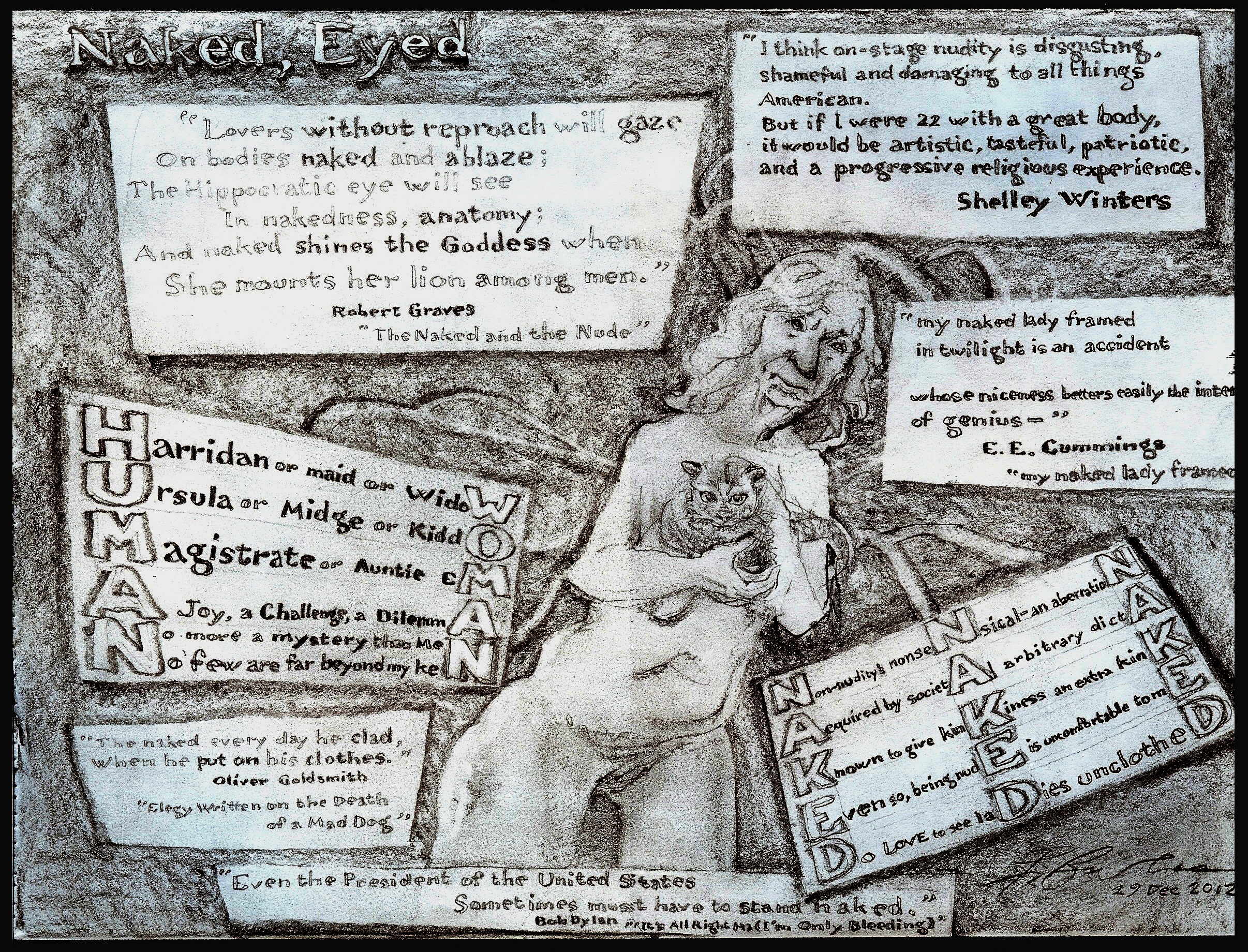
Way back in ’09, and early ’09 at that, I took a tangential look at nudity. The effort, with three epigrammatical quotations and two acrostics, looked like this:

Image
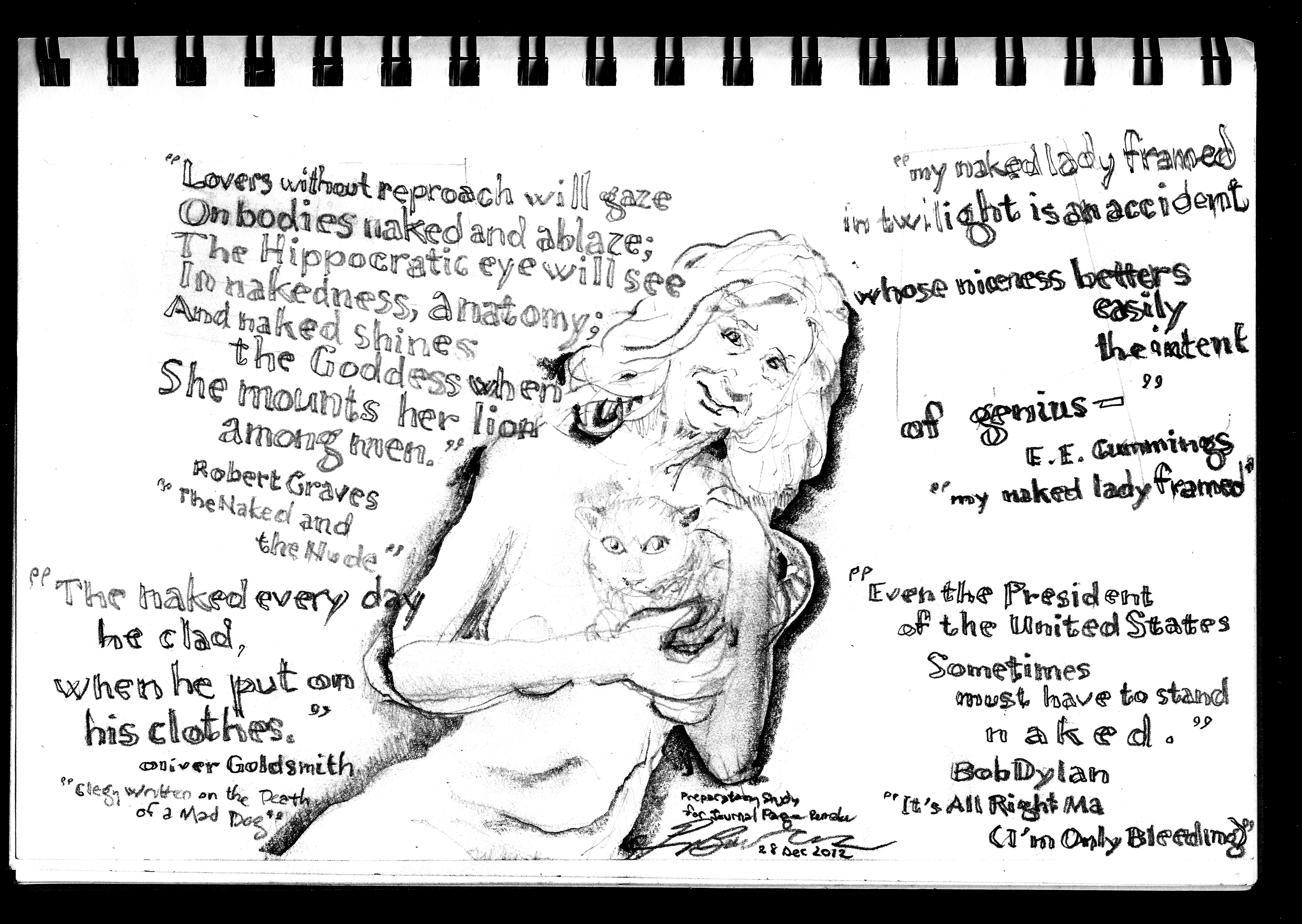
This week I dug it out and had a go at revamping it. I had learned a year ago, reading Art Spiegelman’s awe-inspiring MegaMaus, that his Pulitzer-Prize-winning Maus was thirteen years in the making, and that he’d painstakingly done draft after draft of comic-book pages, panel studies, and layouts. Now I would see what reflection and rework would do for one of my own.

Image

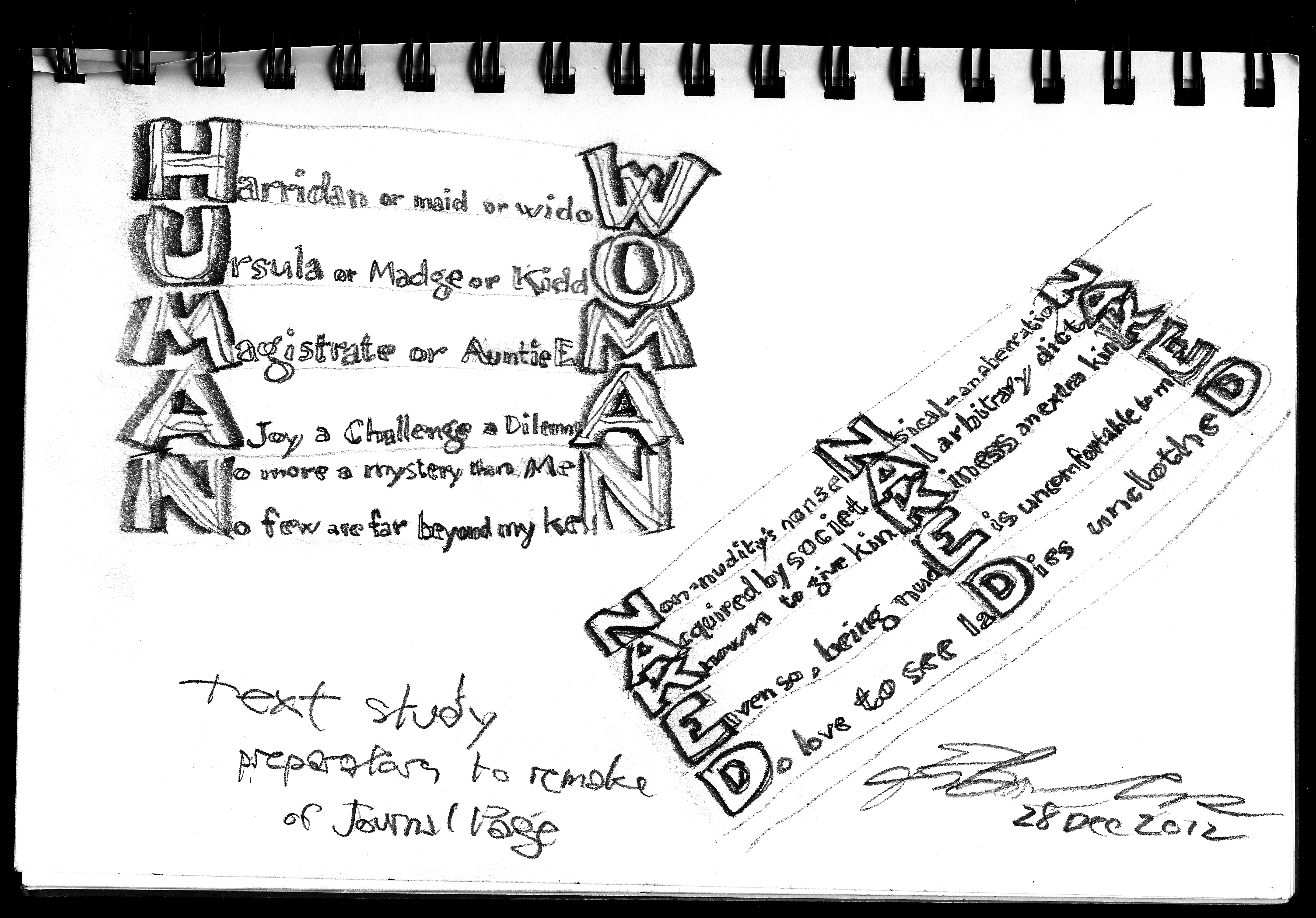
This study includes the epigrams but not the acrostics. I added a quotation, concentrated more on the calligraphy, experimented with more angled text presentations, and drew a different imagined nude cat lady. (I felt the original looked too YOUNG-old.) Then I did a text study of my acrostics:

Image

Note the lines “Magistrate or Auntie Em/A Joy, a Challenge, a Dilemma.” The scansion sort of jumps the rails to maintain acrostic integrity; were there no acrostic, the break would yield “Magistrate or Auntie Em a/Joy, a Challenge, a Dilemma.” I especially liked the flat-breaking plane of the NAKED NAKED NAKED triple acrostic. Now I was ready to integrate the studies into yet another study.

Image

This result took about three hours, and could have taken another three to unmuddy and finesse the image, had I the time. I do not, so I will save the FINAL final image for another time. But there’s a valuable creative-process lesson in reworking an original. I will be doing a lot more reworking, of this and many others, in 2013 and beyond.

What is it?

Image

The underwhelming answer: It is a drawing I made with graphite sticks while trying to have as blank a mind as managed. But it is also one way to illustrate “The Love Song of J. Alfred Prufrock” by T. S. Eliot. Eliot’s poem also refers to an overwhelming question–and then then next line admonishes, “Oh, do not ask, ‘What is it?'”

So one way to answer–or ask–an Overwhelming Question is to make something wordless, that gets people wondering how or why it came to be. Since your mission is accomplished with the asking, you need not provide an equally overwhelming answer.

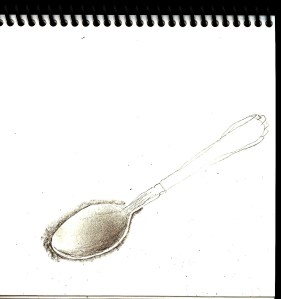
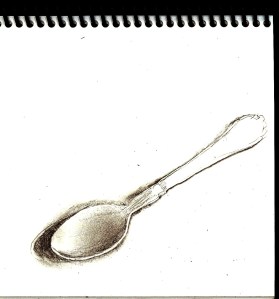
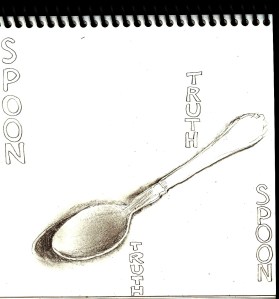
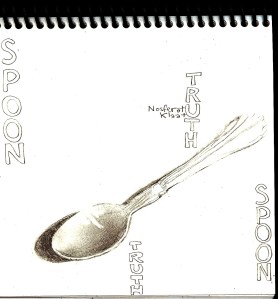
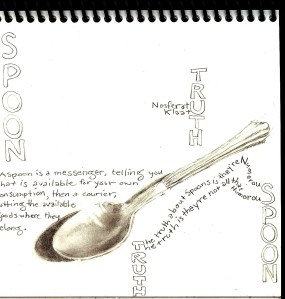
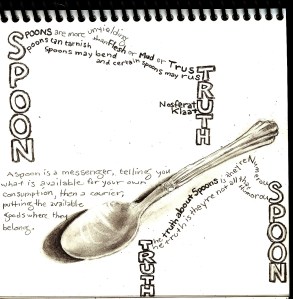
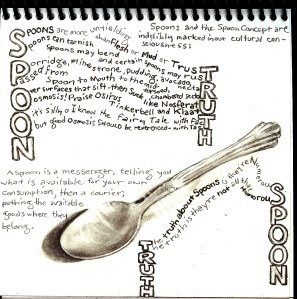
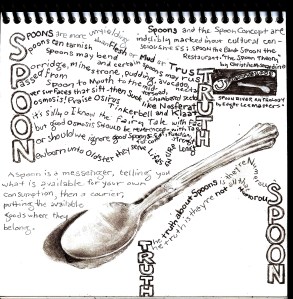
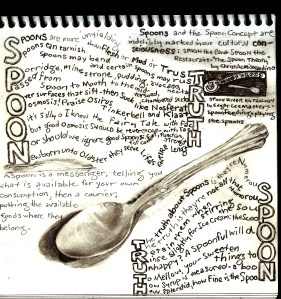
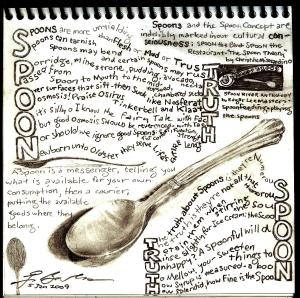
Here is the evolution of a journal page, spoon-fed:

scan0154 scan0155scan0156scan0157scan0158scan0159scan0160scan0162scan0163scan0164scan0165

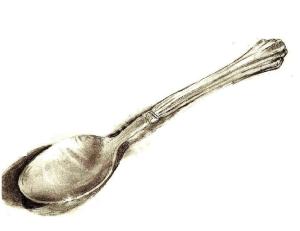
But sometimes we go too far. In this case, the finished spoon, unadorned, seems to speak for itself.

spoon symphony 011609

The title of this post is “Spoon Render Anthology.” It refers obliquely to the classic SPOON RIVER ANTHOLOGY by Edgar Lee Masters, which is a poem cycle of capsule biographies told by the permanent residents of a graveyard. It is, pardon the pun, haunting, to say the least, and brilliant; and if only one reader of these message-in-a-bottle words goes into the ethers and finds and reads it, this blog post will have succeeded beyond its dream of avarice…

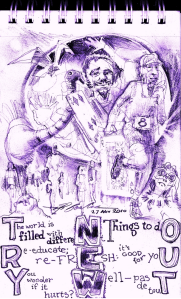
try new out 2010 11 27

It’s Christmas morning, 5:08 AM local time as I type. The houseguests and the significant other sleep soundly, I hope. Soon the year will end.

In 2010 I encouraged readers of my journal pages to “Try NEW Out.” In 2013 I will be taking my own advice.

Happy Holiday, whatever your holiday may be!

Image

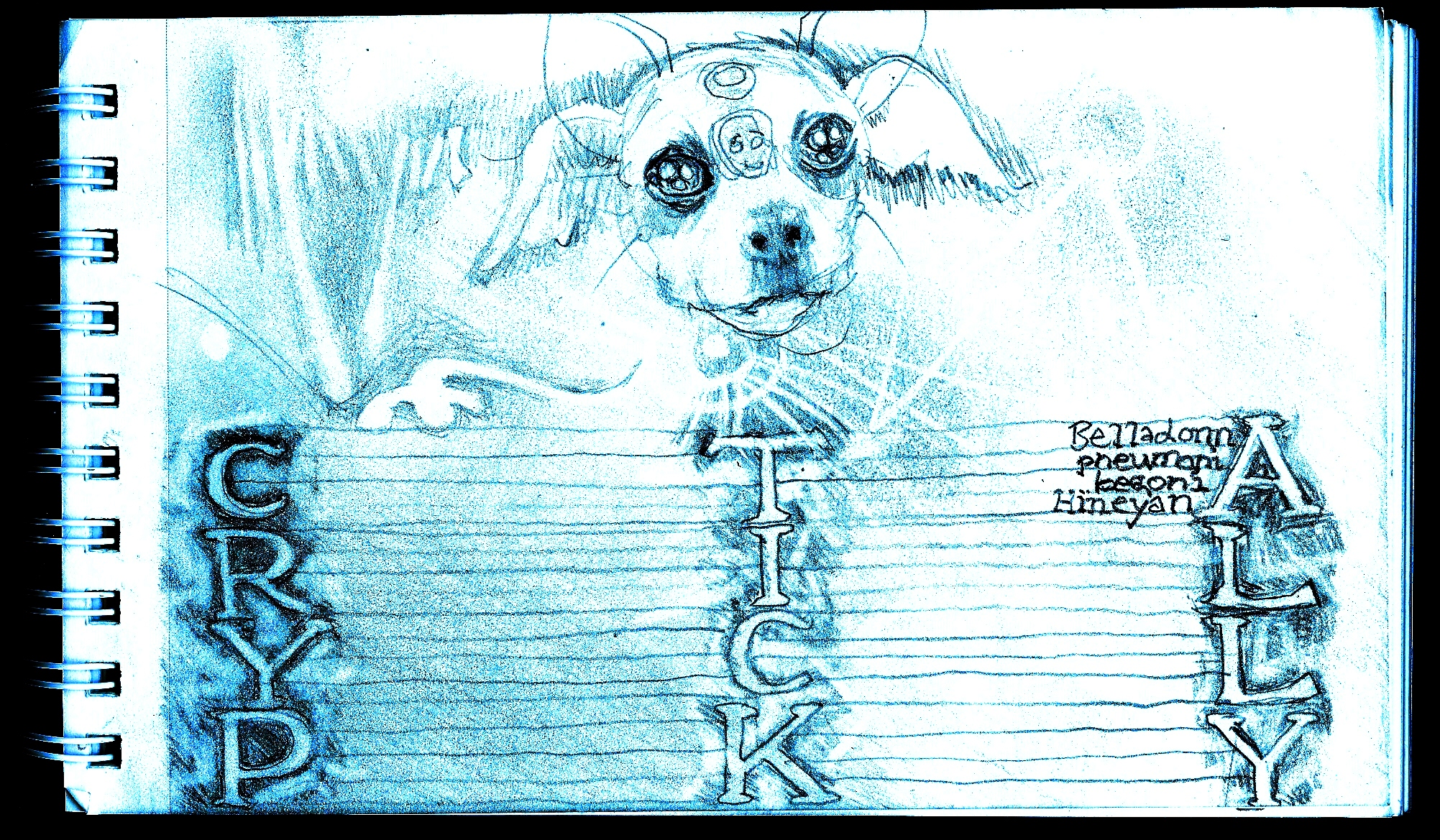
If you have never tried your hand at acrostic poetry, here’s your chance. This triple acrostic has barely been started. but it is revelatory of one of the secrets to acrostic success: start with the end words first. Note also that A, L and Y are easy end-letters for rhymes. (J, Q and U are less so, unless you want to repeat a limited set of words in your poetry.)

In this case the first four end words are Belladonna, pneumonia, begonia, hineyana. That’s an a b b a rhyme scheme, which may or may not lend itself to a Petrarchan sonnet.

I frankly don’t recall whether I ever finished this one. Its color, and the winglike ears of the mournful-eyed pup, suggests the winter holidays, so it grabbed my eye when I was looking through my files.

Image

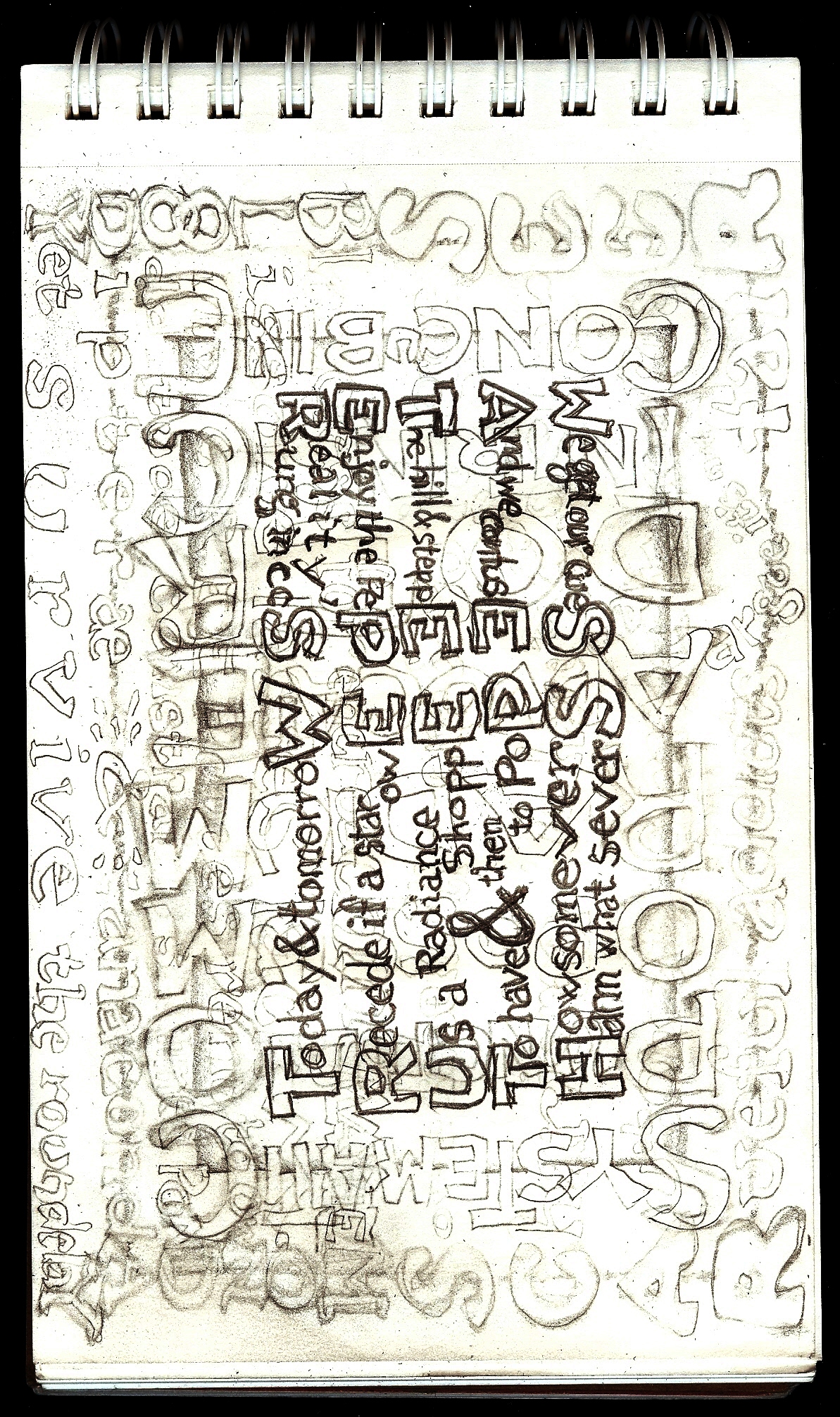
A long time ago I did layer upon layer of words, erasing most of the layer before I went on to the next one. Then I drew an old-fashioned skeleton key over all, and it looked as if it were suspended in a cage of words. Later, but still long ago, I did this, and it is similar, except the visual is entirely calligraphic.